
Federal Infrastructure Programs to the Rescue
EV owners aren’t happy with the public charging experience. While 80% of EV charging happens at home (according to J.D. Power), when EV owners need to use a public charger, the experience is often infuriating. So much so that policymakers worry broad EV adoption will stall unless public charging becomes more streamlined and user-friendly. This is an issue that applies mainly to non-Tesla EVs but has broad implications for consumer mindset and EV adoption.
Recognizing that there aren’t enough DC fast chargers and that many of those already built are often out-of-service, the federal government has committed billions of dollars toward solving the problem. The 2021 Bipartisan Infrastructure Law created two programs, the $5 billion National Electric Vehicle Infrastructure (NEVI) program and the $2.5 billion Charging and Fueling Infrastructure (CFI) program, to add 500,000 level 3 chargers across the country by 2030.
Attaining this lofty goal will be challenging. Especially in light of recent news reports saying not a single federally funded DC fast charger has been built. But progress, albeit slow, is being made. The Joint Office of Energy and Transportation (the Joint Office), which supports the NEVI program, reported in October that 26 states are at various stages of securing NEVI grant awards (including Ohio, which recently broke ground on a new station near Columbus).
Also in October, NYS DOT and the NY Power Authority announced receipt of a $37.4 million NEVI award to identify potential locations and install charging facilities within at least 20 areas along key state highways, with most expected to be completed by the end of 2024. New York expects to receive $175 million over five years from the NEVI program.
Building Them Isn’t Enough, the Chargers Have to Work Too
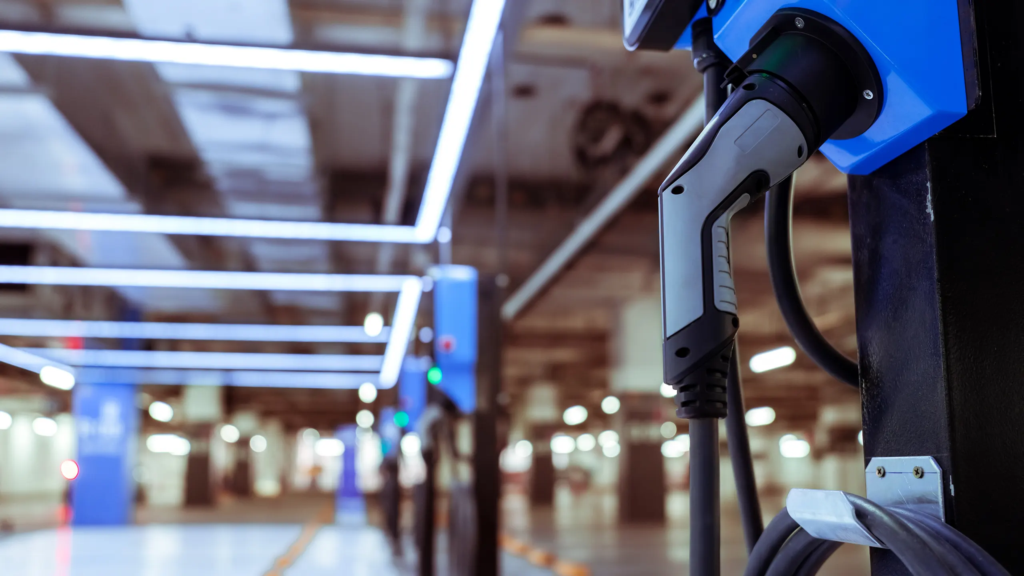
The NEVI program requires at least four charging ports capable of providing 150 kilowatts of fast charging to be installed at each station. That may be the easy part. The real hurdle is making sure the charger actually works for the EV owner when she pulls up to it.
NEVI seeks to address the root causes of the operability dilemma by mandating a 97% “uptime” rate for all funded chargers, improving data sharing across the entire ecosystem (regardless of who owns the network), and encouraging standardization of system components so that, in the words of the Joint Office, “public charging stations nationwide will provide a charge to vehicles the first time, every time.”
a. Uptime
Chargers can be “down”, i.e., out-of-service, for a whole host of reasons: physical damage to the support base, display screen, charging cord, etc., vandalism, connectivity glitches affecting mobile apps, debit/credit card reader malfunction and/or weather-related interference – to name a few. NEVI requires charging stations to be operable, i.e., “up” 97 percent of the time on an annual basis.
To help charging station owners meet the 97% uptime requirement, NEVI allows a portion of the grant award to go toward maintenance and repair of the actual hardware, plus the communication and software components.
b. Data Sharing
The “uptime” mandate will provide Federal regulators with a meaningful compliance metric. However, until they have access to granular data, determining when a charger is “down” and the reason why remains difficult.
NEVI set minimum standards for real-time data on uptime, but, at present, there is a lack of consensus among system operators, parts suppliers, regulators, etc., on how to define exactly what constitutes an outage. The federal government has asked the entities involved to report on solutions to this issue in mid-2025.
c. Standardization
The recent moves by North American OEMs to adopt Tesla’s NACS standard for EV charging connectors underscores how fragmented the EV industry is. But it isn’t just the connectors, the entire charging ecosystem remains far too splintered – from EV drivers having to maintain multiple charging apps on their phones to EV management software not communicating with a particular brand of charger.
NEVI tackles this issue by requiring funded projects to use standards-based technologies that will make the EV charging process user-friendly.

The Clock Is Ticking
The race is on to improve the EV charging experience. Unless policymakers and the industry get this right, and soon, the hoped-for transition away from ICEs will take decades – not years. NEVI represents a sea change in approach. No longer is the federal government simply funding the build-out of chargers. It is now stepping into the breach to provide the leadership needed to unify the industry around a standards-based EV charging system.