“These streets will make you feel brand new, Big lights will inspire you, now you’re in New York, New York” – Alicia Keys, Empire State of Mind (Part II) Broken Down
Keeping New York City’s “big lights” on is no longer as simple as flipping the switch. Recent local law changes are mandating that commercial ratepayers participate in the transition from fossil fuel to renewable energy. To ease the burden of that transition, both NYS and the federal government, as well as the city, have created programs to incentivize the adoption of green energy.
This article seeks to briefly summarize both the city’s laws that require GHG reduction and renewable adoption, and the federal/state/utility programs that offset costs and increase ROI for the adoption of technology required for compliance. NYC laws are backed by penalties for non-compliance starting in 2024.
I. NYC Climate Mobilization Act
New York City passed the Climate Mobilization Act in March 2019. The legislation included several Local Laws (LL) that place the responsibility for lowering greenhouse gas (GHG) emissions on commercial businesses located within the five boroughs.
- LL 84 and 133 apply to all buildings larger than 25,000 gross sq. ft. and require building owners to report annual energy and water use to the city by May 1 of each year and to “benchmark” or grade their building vs. peers.
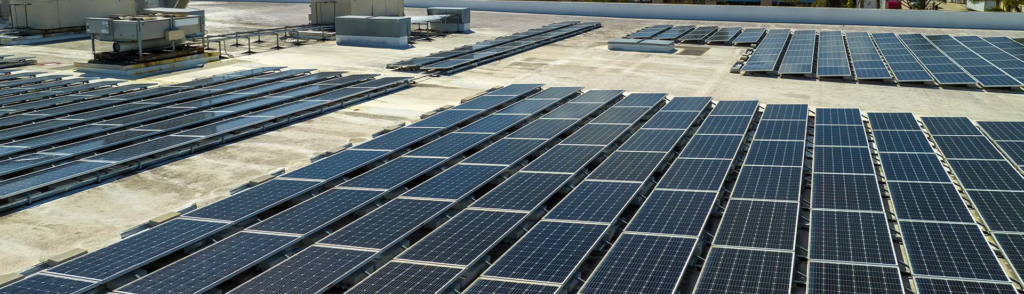
- LL 92 and LL 94 require all new buildings and buildings undergoing major roof renovations to be covered with solar panels, a green roof, or some combination of the two.
- LL 97 applies to all buildings larger than 25,000 sq. ft. and requires each to meet energy efficiency and GHG emissions limits starting in 2024. Building owners that do not meet the new standards face stiff penalties.
II. Federal, NYS, and NYC Incentive Programs
New York City passed the Climate Mobilization Act in March 2019. The legislation included several Local Laws (LL) that place the responsibility for lowering greenhouse gas (GHG) emissions on commercial businesses located within the five boroughs.
- NY-Sun Megawatt Block Incentive reduces the upfront cost of a solar system by directly paying the installer $1-1.20 per Watt of solar capacity installed (roughly 30% of the installed cost). Con Ed’s participation in the program began in 2014 but will phase out as its block allocation is nearing full depletion. We expect incentive amounts to step down to 80 cents/W in Q1 2024.
- Federal and NYS solar tax credits: The Federal tax credit returns 30% of the installed cost of a solar and/or battery system as a credit against federal tax obligations, while the NYS tax credit is worth 25% of the installed cost of the system or $5,000 – whichever is less. This legislation may be up for review during the next election cycle, so acting now to secure the benefits is a strong consideration.
- NY solar tax exemptions and abatements: i) the retail sale and installation of commercial solar energy systems are exempt from 4% state sales tax; ii) NYS Real Property Tax Law (Section 487) relieves property owners of any increase in assessed value directly resulting from the installation of an eligible energy system for a period of 15 years; and, iii) NYC’s property tax abatement program applies to properties with grid-connected systems (which includes battery storage) and reduces the amount of property tax owed by 30% of the installed price taken over 4 years (max abatement is $62,500/year or $250,000 total).
- Value of Distributed Energy Resources (VDER) or Value Stack: a utility bill credit for the value of solar electricity exported onto the grid reflects varying values depending on the time of day and time of year. Shifting excess solar energy during more valuable periods enhances VDER values. This performance-based revenue stream, together with active demand charge management, can reduce utility bills to a fraction of current forecasts.
- Modified Accelerated Cost Recovery System (MACRS): reduces the present value of corporate income tax liabilities. Qualifying solar equipment is eligible for a cost recovery period of 5 years.
- NYSERDA Battery Storage Incentive: expected in Q2 2024

III. EV-related incentives
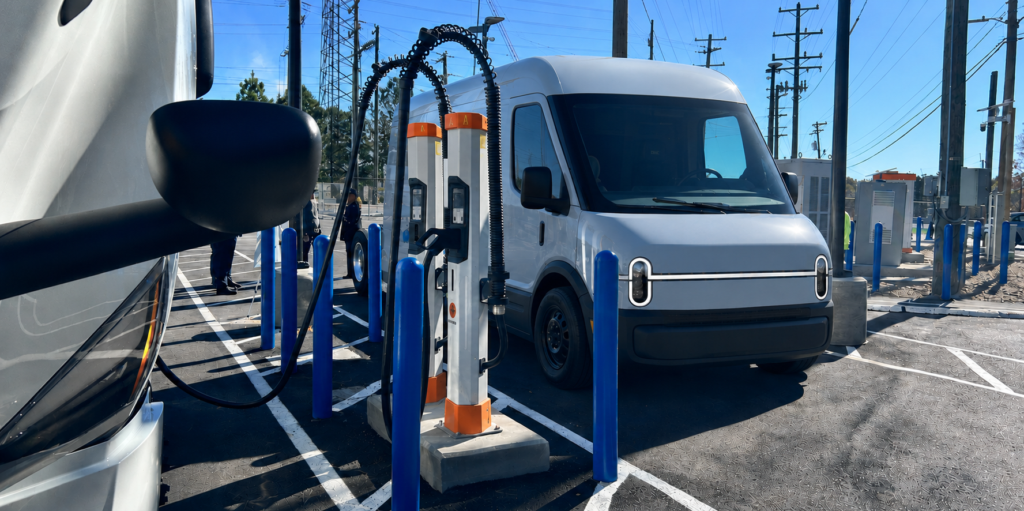
- Utility “Power Ready” (ConEd) and “Make Ready” (PSEG LI) incentives remain available. These programs offer rebates to offset a significant portion of a commercial customer’s electric upgrades typically required to accommodate EV charging stations.
- Con Ed’s Commercial Smart Charge Program: taking enrollment in January 2024, this program provides bill credits for dealerships that avoid operating EV chargers during specific time periods that coincide with grid constraints.
- Load Management Technology Inventive Program: will subsidize the adoption of managed charging technology and battery storage co-located with EV charging. Expected in Q2 2024.
Determining if your building is subject to NYC’s local laws and calculating how much you can benefit from any of the incentive programs requires input from your attorney and your tax advisor. An energy management consultant, such as Sprocket Power, can also help with the engineering, financial evaluation, and installation of energy management technology that can take advantage of those programs and support your compliance with these laws. Contact Maria Fields, CEO of Sprocket Power, at (914) 646-4016, mfields@sprocketpower.com to discuss how Sprocket Power can help meet the challenges facing NYC dealerships.