An Emerging Business Risk That Can Be Controlled with Available Technology
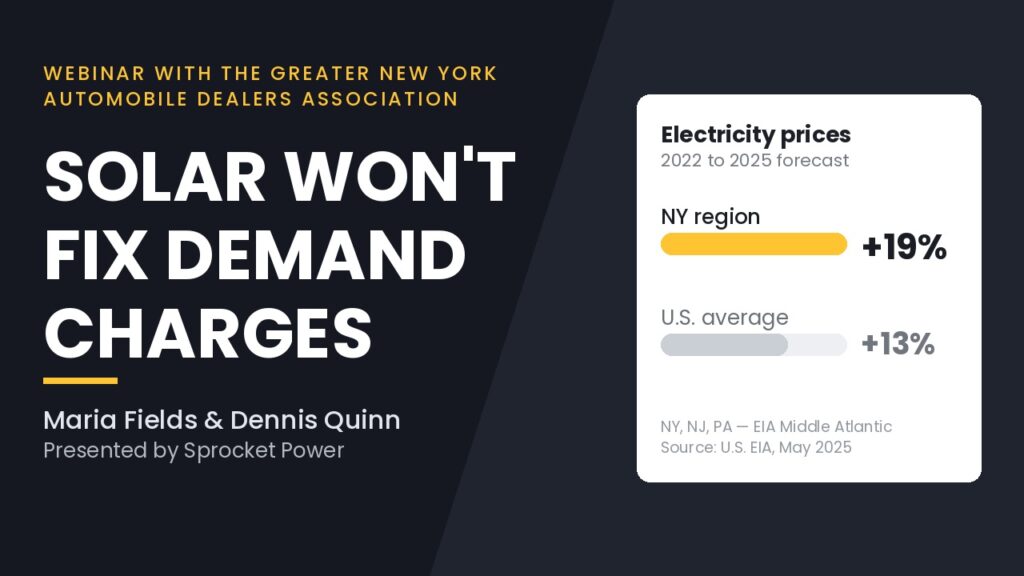
It isn’t unreasonable to be concerned about the state of the electric power grid and many businesses are. The federal government and individual states are imposing policies that set aggressive goals for renewable power generation and the transition to electric vehicles and other forms of electrification. Together, these policies put significant stress on the electricity grid and raise fears that reliability will suffer and/or costs and price volatility will rise.
So much so that the July 2023 North American Electric Reliability Corporation (NERC) reliability risk report (https://www.nerc.com/comm/RISC/Related%20Files%20DL/RISC_ERO_Priorities_Report_2023_Board_Approved_Aug_17_2023.pdf) added “Energy Policy” as a new risk category. The report states that energy policy “is further contributing to the grid transformation, which includes the shift away from conventional synchronous central-station generators toward a new mix of resources,” including forms of renewable energy. These generation sources are intermittent and will “be more dependent on communications and advanced coordinated controls “to maintain reliability.
This transition is largely driven by advances in technology such as solar, wind, battery storage, and advanced communication. Similar technological advances have transformed other sectors of the economy (computing, cellular communication), but the speed of change is impacting an already stressed and aging grid.
The wisdom of government policies and the speed of technology implementation can be debated, but the consequences are unavoidable – electricity demand will increase, costs will rise, and delivery risks will grow.
Businesses taking a long-term view must develop a strategy to manage risks presented by the above trends. The good news is that available technology can help businesses transition from grid reliance to energy self-reliance, largely shielding them from issues of reliability and cost.
Energy Policies to Watch
Federal Government

The Biden Administration has set goals of a carbon pollution-free electricity sector by no later than 2035 and a net-zero emissions economy by no later than 2050. The administration is expecting that the U.S. power grid will be powered by 81% green energy by 2030.
The U.S. Environmental Protection Agency has set new vehicle emissions standards that electric vehicles account for 67% of new light-duty vehicle (LDV) sales and 46% of new medium-duty vehicle sales in model year 2032.
The push for electrification is anticipated to drive up total energy demand by about 14% by 2030 and 25% by 2035, according to data from Princeton University’s Rapid Energy Policy Evaluation and Analysis Toolkit. By comparison, U.S. electricity demand grew by about 5% annually over the last decade. Using a simplified analysis, this projected growth could result in demand far outstripping supply. However, the real impact of this demand growth is far from simple and depends entirely on when and where this new demand is added. Electrification can contribute to a more dynamic, flexible, resilient, and cost-efficient grid, but only with the utilization of advanced “smart grid” technology.
State Policy – a double-edged sword

New York and California, among other states, are looking to transition to this smarter grid through a set of policies designed to encourage the active participation of businesses in the grid of the future. State policy is increasingly delivering price signals to businesses to reflect the impact of their actions on the overall system – these signals create cost and benefit.
Costs – Demand Charges, Peak Rates, Time of Use Rates:
If better outcomes can be created for state ratepayers by discouraging uncontrolled demand growth, states can create policies to make this uncontrolled growth expensive, which they have through rising “demand charges,” new time-of-use rate schedules, and other programs that charge for the grid impact of specific energy uses.
Revenues – Value of Distributed Energy Resources (VDER) Value Stack in NY and Flex Market and Self-Generation Incentive Program (SGIP) in CA:
Conversely, if businesses can feed energy back into the grid in periods when demand outstrips supply, they can be compensated for contributing to reducing grid stress. Several programs exist to compensate businesses for this contribution to a smarter grid. These programs compensate businesses through bill credits, revenue checks, and other mechanisms.
The resulting programs are complex but highly impactful to the bottom line of commercial businesses. The days of simplified utility rates and centralized grid control by utilities are over. Approaches that take advantage of available technology and provide economic modeling to aid business decision-making and planning will be increasingly valuable to business owners.
A Managed Microgrid Offers Businesses Protection from Grid Fragility
Businesses face risk and uncertainty every day. Whether the lights turn on when you flip the switch shouldn’t be one of them. Unfortunately, today’s public policies are raising the level of concern, but forward thinking businesses are mitigating that risk by taking advantage of these technologies and deploying a managed microgrid at their facilities.
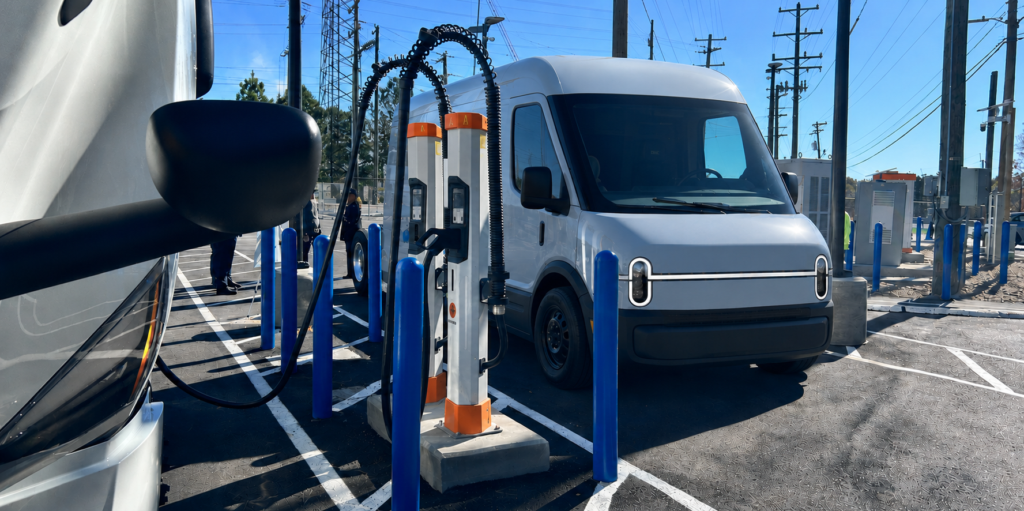
A managed microgrid maintains ties to the grid, but operates independently using one or more kinds of distributed energy generation to produce its power, coupled with energy storage, EV chargers, and software management tools to optimize energy use, reduce costs, and generate revenues.
To learn more about managed microgrids and how Sprocket Power can manage your electricity use while controlling your costs, contact Dennis Quinn at (503) 333-5474, dquinn@sprocketpower.com, or Maria Fields at (914) 646-4016, mfields@sprocketpower.com.