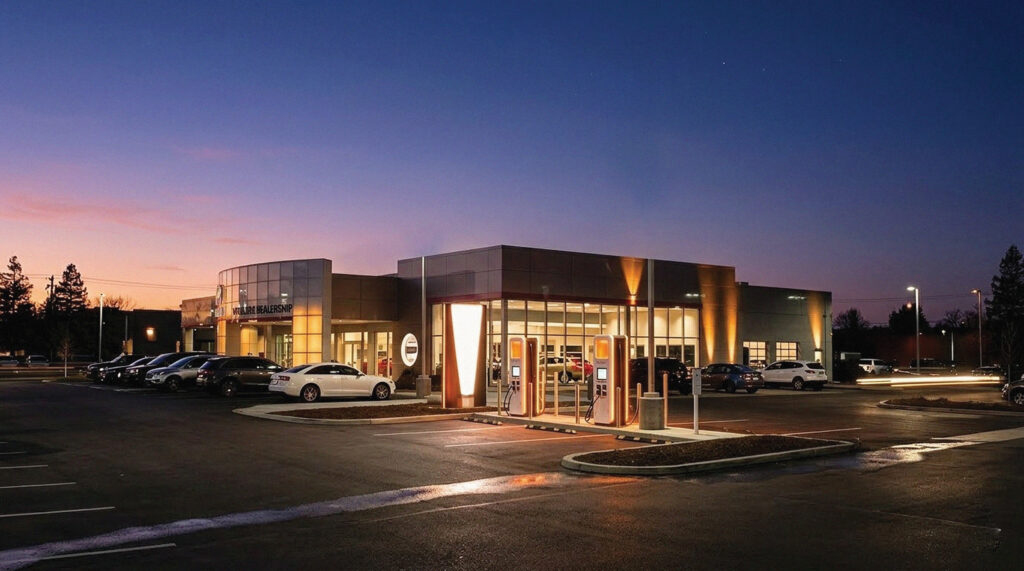
“When Sprocket Power introduced us to this program, I was eager to enroll, and they made the process seamless. It’s reassuring to know we’re now capturing revenue that previously went untapped.”
Ben Hannah
General Manager at Audi Marin
What Are Carbon Credits?
Low Carbon Fuel Standard (LCFS), is a market-based incentive program overseen by the California Air Resources Board (CARB). The program was created to help reduce greenhouse gas emissions in California and it does so by requiring what you might call ‘carbon debtors’ – like oil and gas companies to buy credits from ‘carbon generators’ – those who dispense alternative fuels with a lower carbon intensity.
In the case of EV charging station owners, the electricity that is dispensed into vehicles counts as an alternative fuel and the total energy (kWh) can be converted into credits, transacted on the LCFS market and bring in revenue for station owners.
How Do I Enroll? Is There A Cost?
There is no cost to enroll your charger. It only requires a little paperwork to enroll and for your chargers to meet these two important qualifications:
First, the charging station(s) needs to be installed on non-residential properties.
Second, the stations must be networked, i.e. have a software connection in order to produce an energy report.
Part of the process also involves getting charging session data verified by a third-party before it can be transacted. Sprocket Power can help connect you with the right partner in order to get your chargers enrolled and earning revenue.
How Much Revenue Are We Talking About?
Perhaps the most common question – and rightfully so! There are three main factors that go into determining how much revenue your stations can generate:
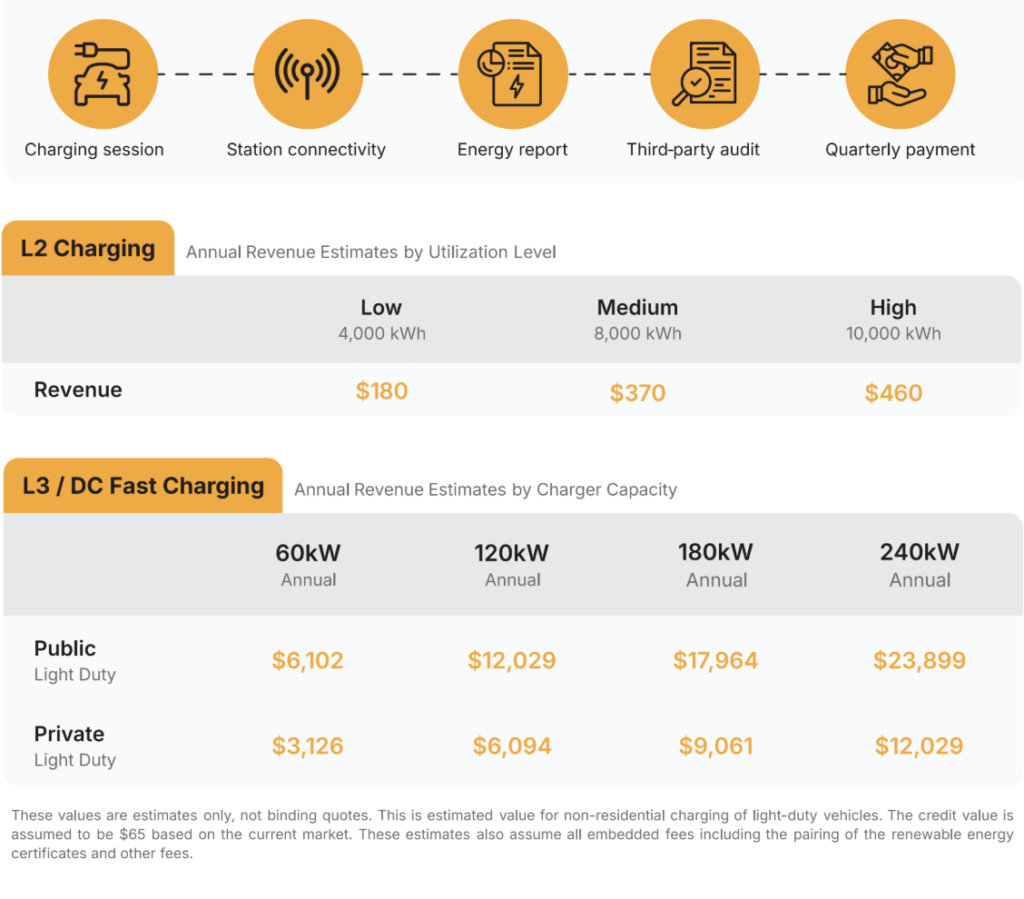
- How much energy (kWh) is dispensed out of each port: the more charging sessions, the more energy to report, the more credits that are generated
- The value of the credits at the time of reporting: like any market, the laws of supply and demand play a role in determining how much a credit is worth
- Distinctions between L2 & L3 stations: recent rule changes now distinguish between public vs private L3 stations with the former eligible to receive a minimum amount helping to make publicly available DC fast chargers the most valuable
See the chart below for a quick estimate. We can also provide more precise calculations.
What If My Chargers Don’t Have Software, Can I Still Participate?
This is one is a little tricky. Without a software connection, there is no way to generate an energy report. In many cases it is possible to add a network connection to chargers (or even switch software platforms) and by doing so, you can make your charger eligible to participate.
If you’re not sure, we can provide some guidance on how to add connectivity to your charger and which software platform may best be suited for your site.
Why Haven’t I Heard Of This Program Before?
Interestingly, most people are not familiar with LCFS, including many in the EV charging industry.
There are certainly some complexities and nuances to this program that help keep this sort of hidden. But with a little education, a closer look at eligibility and how to enroll, the shroud can be lifted and the monetary benefits can be generated.
What Else Don’t I Know?
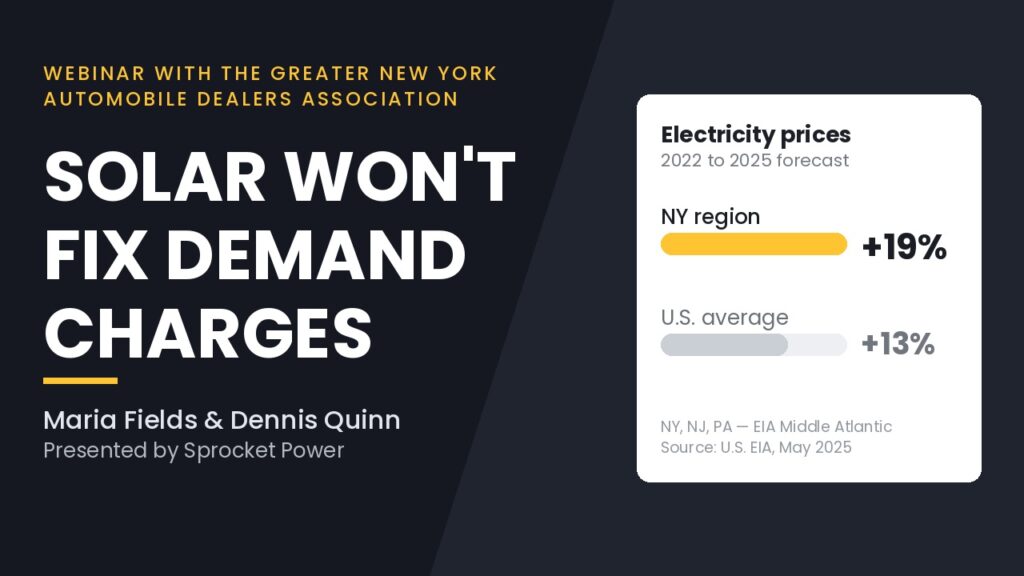
Indeed, there is another hidden aspect to EV chargers. In this case, it has to do with the impact they have on your electric bill in the form of demand charges. Often confused with peak hours, or time-of-use billing, demand charges result from a spike in consumption and are an additional fee on your electric bill, separate from your overall energy use and increasingly more and more expensive.
The good news is that commercial properties are now starting to see the upside of having on-site battery storage. On this front, Sprocket Power can provide a detailed energy and financial analysis and what the ROI would look like.
And similar to what carbon credits are to EV chargers, there’s a way for your battery to generate revenue from grid services programs, which Sprocket oversees directly as part of our long-term operations of these assets. It’s easy to get an analysis done so you can see what revenue potential there is from implementing battery storage with Sprocket Power as well.
Want to find out what your dealership may be eligible for?
Contact us now or schedule a meeting!