
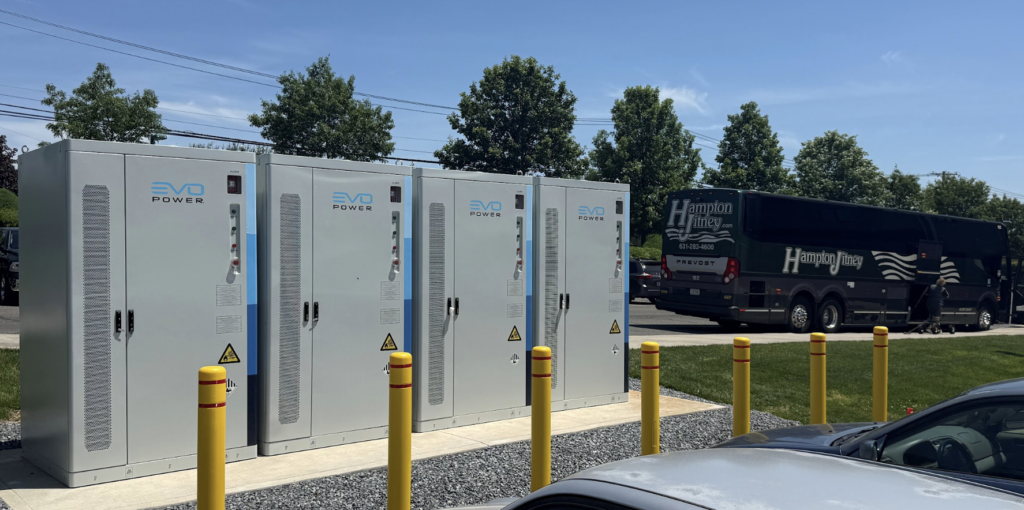
Hampton Jitney is a coach and transit company serving the New York metro area, run by second-generation owners Geoff and Andrew Lynch. Their Calverton terminal is a bus hub, customer parking facility, fleet fueling site, and a growing location for public and private EV charging.
Thanks to our partners: EVO Power USA, PSEG Long Island, Drive Electric Long Island, Empire Clean Cities, Town of Riverhead, SLC Electrical, NY State Solar, Kempower, Ranial Systems
The Challenge
The terminal already ran a high-demand energy environment.
As ownership planned to electrify their own fleet and open the site as a charging hub for other operators, the grid capacity and utility cost implications were hard to ignore. Large-scale EV charging is one of the biggest sources of demand charges a commercial site can generate.
The Lynch family wanted to build for the future in a way that made financial sense from the start, not take on infrastructure that brought new cost problems with it.
The Solution
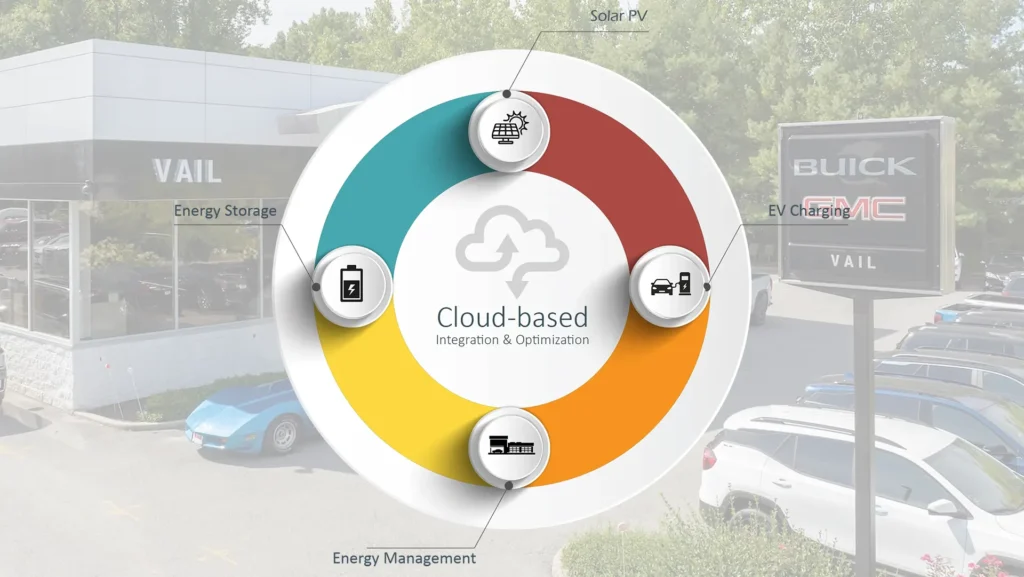
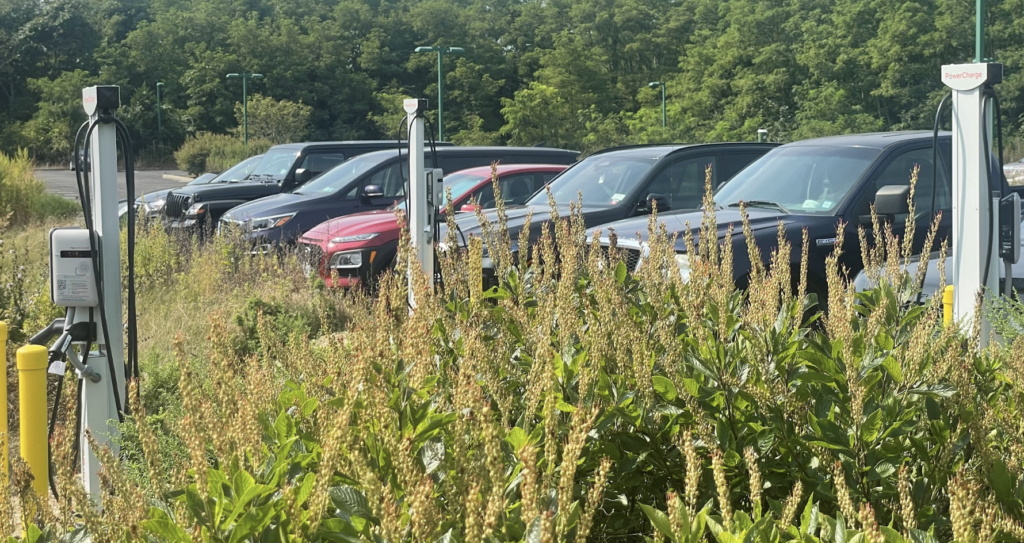
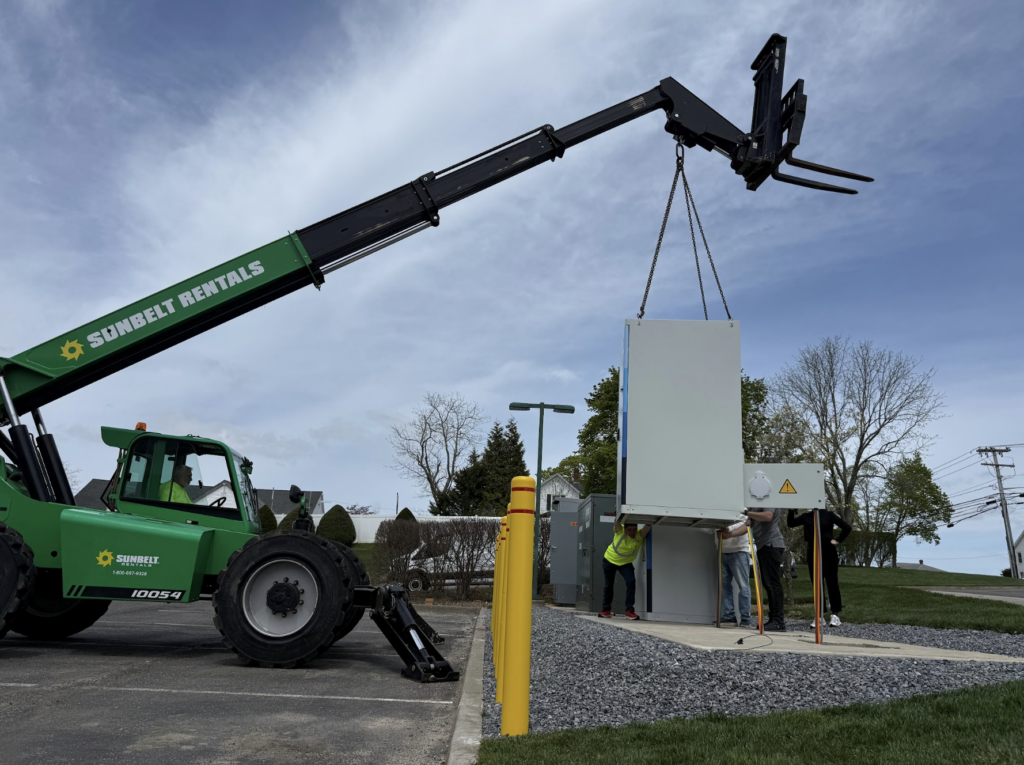
Sprocket Power designed and installed a managed on-site energy system built for the terminal now and its planned growth. Phase one includes 10 Level 2 customer charging ports, 250 kW of rooftop solar, a 500 kW / 1,000 kWh battery storage system, and a service upgrade from 1,000 to 1,500 kVA.
The battery and controls manage when and how energy is pulled from the grid, keeping demand charges in check as charging loads grow. The system also participates in grid programs that generate bill credits and revenue over time. A straightforward charger installation would not provide either of those things.
Sprocket Power also coordinated directly with PSEG Long Island on long-range grid capacity planning, including a 1 MW DC fast charging expansion planned for phase two. That kind of utility coordination is part of what the business gets when the system is actively managed.
The Results
- Up to 70% reduction in net utility costs when fully implemented (projected)
- 10 Level 2 customer ports and bus DCFC operational in phase one
- 500 kW / 1,000 kWh battery system providing active demand charge control
- Grid program participation generating ongoing bill credits and revenue
- Service capacity increased to 1,500 kVA, ready for phase two
- PSEG Long Island coordination in place for future grid capacity
- Sprocket Power manages the system and provides monthly performance reports
What This Means for Your Businesses
Hampton Jitney is a good example of what happens when electrification planning and energy cost management are treated as the same decision. The infrastructure that makes a fleet charging hub work is the same infrastructure that keeps costs from spiraling as the site scales.
For any operator building out fleet charging, the energy strategy needs to be in place before the loads go in.