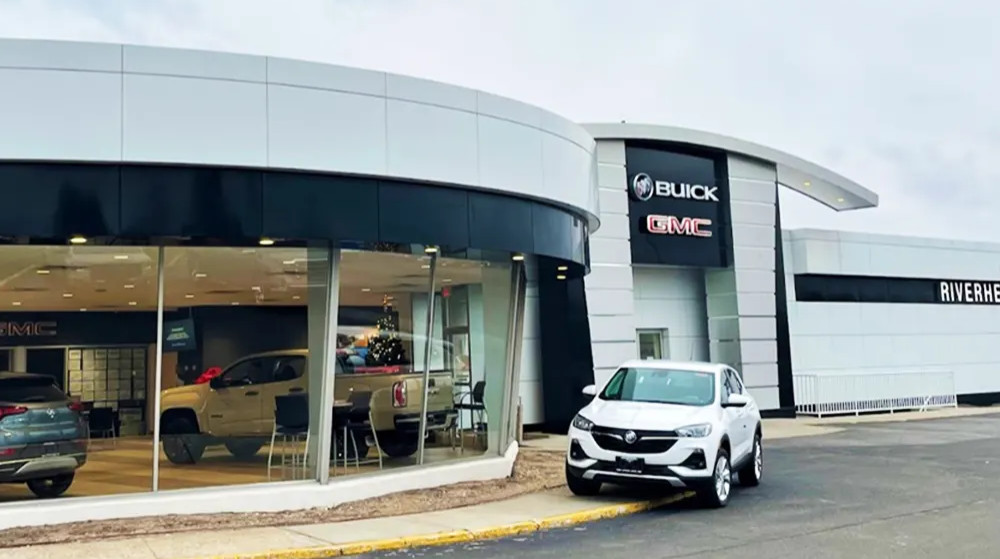

About the Project and the PowerReady Program Context
Vail Buick GMC, a dealership in Bedford Hills, New York, set out to install EV charging infrastructure while preparing its facility for long-term electrification.
Through Con Edison’s PowerReady Program, the dealership had access to incentives designed to offset the cost of EV charging infrastructure and grid upgrades.
The opportunity was clear — but capturing it required the right technical and financial approach.
The Infrastructure and Cost Challenge Behind EV Charging Deployment
To install DC fast chargers and Level 2 stations, the dealership faced several critical challenges:
- required upgrade from 208V to 480V service
- high upfront infrastructure and electrical costs
- risk of increased operating costs from unmanaged charging demand
- complexity of coordinating incentives, utilities, and system design
Without a coordinated strategy, the project risked becoming both expensive and inefficient.
The Business Goals Behind the Project
The dealership aimed to:
- deploy EV charging infrastructure aligned with OEM requirements
- minimize upfront capital costs through incentives
- reduce long-term energy costs and demand exposure
- create a scalable, future-ready system
- improve overall energy performance of the facility
The Integrated Microgrid and Incentive-Optimized Solution
Sprocket Power designed and implemented a managed microgrid system, structured to fully leverage available incentives while optimizing long-term performance.
The system included:
- solar PV system (50 kW, ~7,000 sq ft) \
- battery storage (100 kW / 186 kWh) (
- EV charging infrastructure (Level 2 + DC fast charging)
- intelligent load and charging management
- full facility energy optimization
In parallel, Sprocket Power coordinated all available financial programs — including Con Edison, federal, and New York State incentives — to significantly reduce upfront investment.
How the Project Maximized Incentives and Long-Term Financial Performance
The success of the project was driven by combining technical design with financial strategy.
Sprocket Power:
- structured the system to qualify for maximum available incentives
- leveraged programs like SmartCharge and demand-response incentives
- optimized system design to reduce operating costs over time
- ensured the infrastructure was future-proofed for expansion
This approach allowed the dealership to not only reduce upfront costs, but also improve long-term returns.
Results Achieved Across Cost Savings, Incentives, and Sustainability
Financial Results
- ~79% reduction in utility costs by year five
- more than $625,000 in incentives secured
- significantly reduced net capital investment
Operational Results
- EV charging deployed without uncontrolled demand cost increases
- improved control over facility energy usage
- optimized system performance through integrated controls
Strategic Results
- future-ready infrastructure aligned with EV growth
- contribution to grid stability through managed energy usage
- alignment with New York’s climate and emissions goals
What This Project Shows About Incentive-Driven EV Infrastructure
This project highlights a key insight:
EV infrastructure projects are not just technical — they are financial and strategic.
Programs like Con Edison’s PowerReady can dramatically improve project economics, but only when:
- the system is designed correctly
- incentives are fully leveraged
- energy usage is actively managed