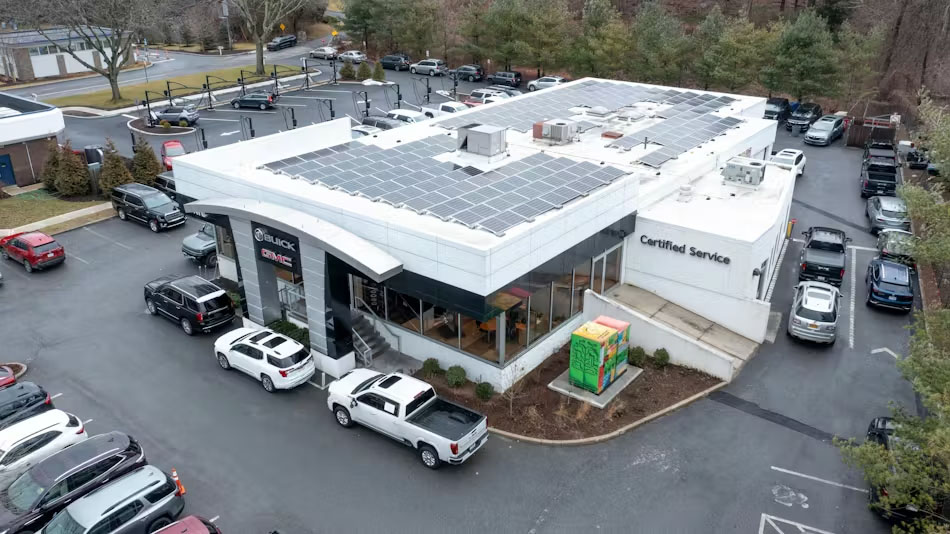

Sprocket Power, Consolidated Edison’s Power Ready Team, Bedford Hills Town Supervisor Ellen Calves, Vail Buick owner Greg and Bob Vail, and representatives from the Greater New York Automobile Dealers Association participated in the public “reveal” of the managed microgrid installed at Vail Buick in Bedford Hills on October 20th.
The Vail Buick project represents a model for electrification that strengthens business, supports the electrical grid, and meets federal, state, and local policy goals for reducing greenhouse gases (GHGs).
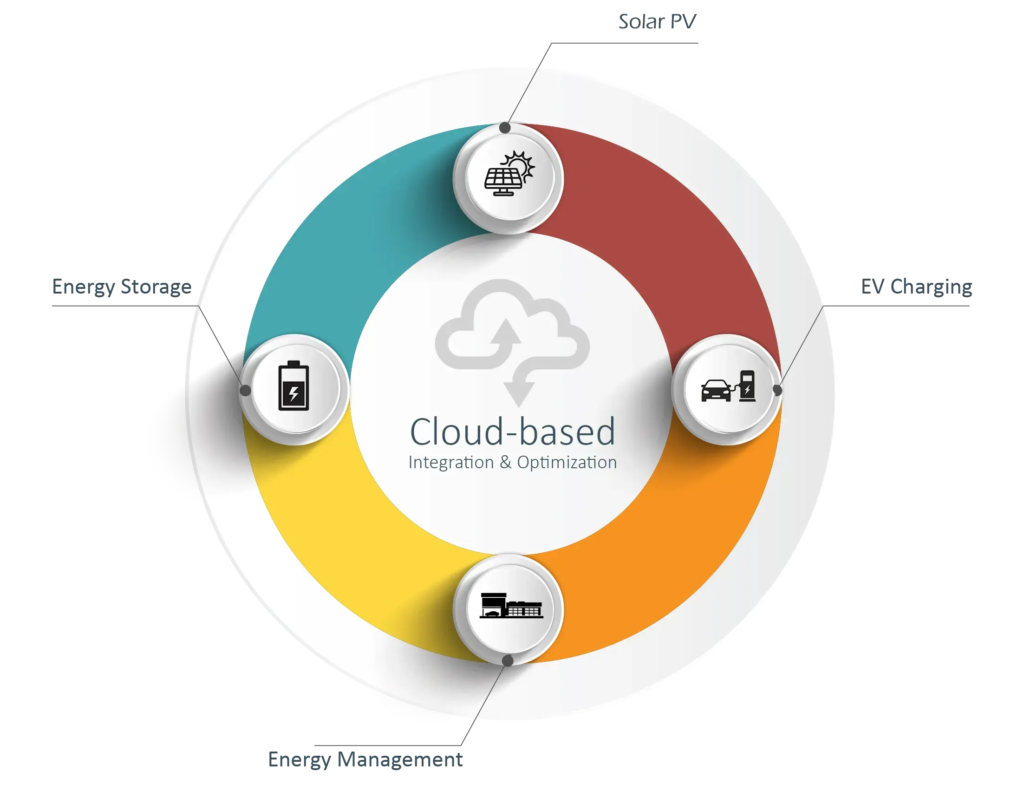
Vail adopted Sprocket Power’s managed microgrid approach that integrates solar, energy storage, EV charging management, facility controls, and complete energy management. For Vail, that means they can now reduce their net utility bill to fractions of future forecasts, gain a level of energy independence, remain operational during power outages, and charge their EV fleet with a “clean charge”.
For the community and the environment as a whole, Vail’s adoption of a managed microgrid is a step in achieving our “big picture” climate action goals. The project aligns with New York’s Climate Leadership and Community Protection Act (CLCPA) and demonstrates the benefits of policies designed to advance the goals of this legislation.
Transportation makes up 28% of NY State’s GHG emissions. Transportation Electrification – the term for the transition of the automobile from the internal combustion engine to fully electric power – is being advanced through a number of policies, including rebates/incentives and the banning of sales of new vehicles with internal combustion engines past 2035.

Those policies, plus manufacturer demands that their franchise dealers install EV chargers, put automobile dealerships on the front lines of this revolutionary shift in how the nation’s vehicle fleet is powered. The challenge for automobile dealers is that without proper management and control, the installation of EV chargers results in high and volatile energy demand and cost. That becomes a problem for all of us because uncontrolled energy demand puts stress on an already fragile and expensive electric grid.
Unfortunately, most dealerships are Small and Mid-Sized Businesses (SMBs), a market segment that has long experienced a gap in the adoption of sophisticated management and control technologies common in larger facilities despite their proven advantages. Sprocket Power’s expertise is in the engineering and valuation of an integrated technology solution to overcome these barriers. By taking advantage of available federal tax credits, Con Ed programs to reimburse EV charging infrastructure, and NY State programs that provide utility bill credits for feeding back into the grid at times of high stress, Vail was able to realize the economic benefits of the managed microgrid approach. “As I prepare for GMC’s EV rollout, a main concern is the volatile and rising utility cost associated with EV charging. The microgrid approach gives me the ability to control these expenses and maintain predictability over my bottom line-all while- “greening” my business and moving towards a Zero Carbon Future”, said Greg Vail, Vice President of Vail Buick GMC.
NY State goals advanced through the project:
- Project benefits align with state goals around market engagement and measured performance that underpin the path towards an equitable and efficient energy transition;
- Project engages private capital sources, preserving ratepayer and public funds;
- Dealers are better positioned to educate consumers and encourage broader adoption of EVs; and,
- New York State and local communities move closer to attaining their climate goals.
Facts and Figures:
| Solar PV | ||
| Size of Solar Array | 7,000 Sq Ft | |
| Solar Capacity | 52 kWdc | |
| Annual Energy Production | 65,000 kWh | |
| Battery Storage | ||
| Capacity | 100 kW | |
| Energy | 186 kWh | |
| EV Charging | ||
| Level 2 | (2) 19.5 kW chargers | |
| Level 3 (DCFC) | (1) 62.5 kW charger | |
| Utility Service – Con Ed | ||
| Previous Service | 208V | |
| Upgraded Service | 480V | |
| GHG Reduction | ||
| Annual CO2 reduction from project | 187 Tons | |
| Equivalent CO2 reduction in trees | 10,000 trees planted | |
| Equivalent CO2 generation of homes | 121 homes | |
| Energy Use | ||
| Reduced Annual energy use – year 5 | 74,500 kWh (50%) | |
| Reduced Peak demand – year 5 | 65 kW (50%) | |
| Net annual utility bill – year 5 | $32,906 (79% reduction) |