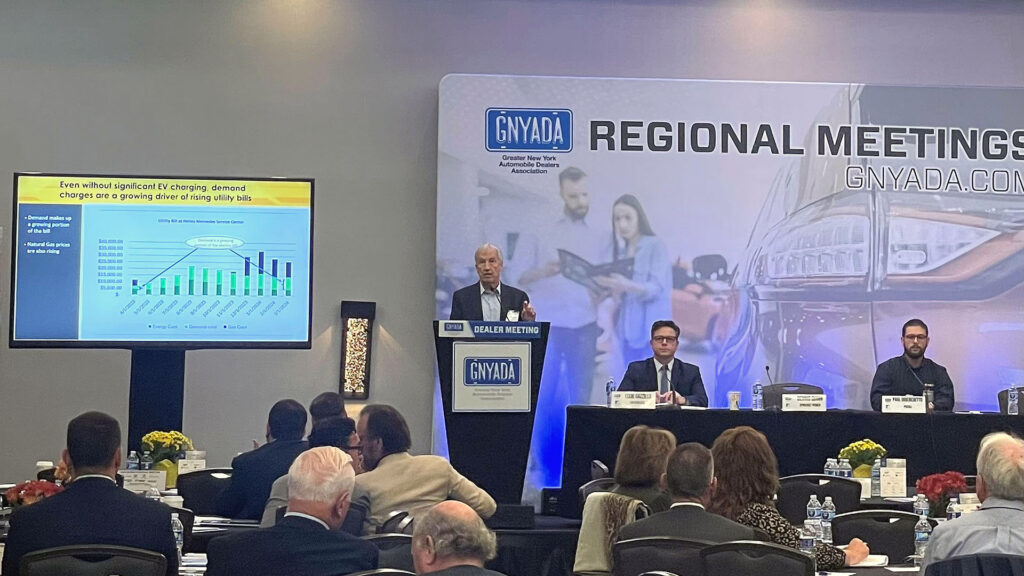
Sprocket Power’s corporate leadership team discussed the economics of EV charging and rising utility bills with metro-area franchise new car dealers at GNYADA’s regional meetings in October.
Sprocket Power’s CEO Maria Fields and President Dennis Quinn shared real-world examples of the impact of EV charging on a dealership’s bottom line. Even limited use of EV charging can have a significant impact on utility bills. Fields highlighted a Brooklyn dealership that experienced a tripling of their monthly utility bills after installing two 62.5 kW public chargers.
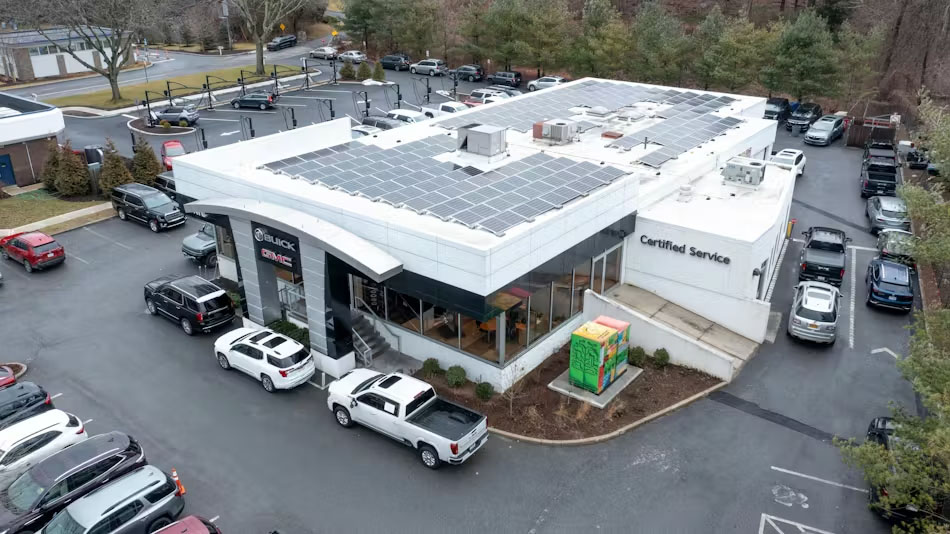
Dealers in attendance learned how Sprocket Power can apply currently available strategies to mitigate the economic impacts of EV charger operation. By implementing a building management system tied to EV chargers, dealers can better control usage and manage demand charges. Additionally, installing on-site solar and battery storage can further reduce the financial impact of EV charging on utility costs.
When discussing battery storage, Fields and Quinn emphasized that increased electrification will lead to higher demand spikes and increased utility bills. However, battery storage can serve as a powerful tool to directly address these challenges.
Dealers—or any small to medium-sized businesses—interested in learning more about how Sprocket Power can help reduce demand charges and lower utility costs caused by EV charger operation can contact:
- Maria Fields: (914) 646-4016, mfields@sprocketpower.com
- Ben Kriegler: (917) 363-0606, bkriegler@sprocketpower.com