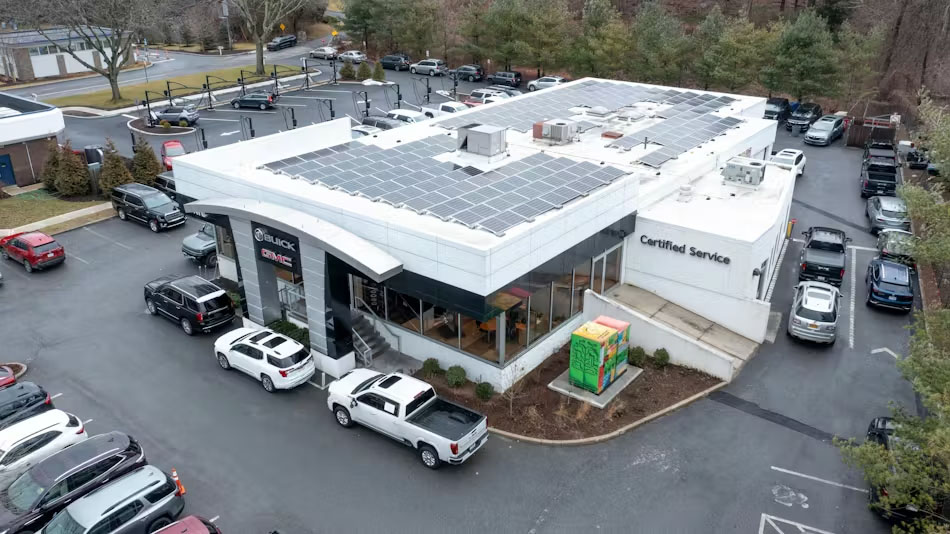

US auto manufacturers are counting on their franchise dealers to install EV charging stations – often to be available to the public – as a way to encourage customers to purchase their expanding inventory of EV models. Some of the more significant requirements are outlined below, but auto dealers are
Stellantis
Jeep parent company Stellantis is working with their 2,600 dealers to determine each one’s ability to transition to EV sales and service. The transition is imperative as Stellantis plans to roll out 25 EV models by the end of the decade. According to a spokesperson for the automaker, dealers who want to sell EVs “will need to make the necessary infrastructure modifications in their dealerships to sell those vehicles.” Technical requirements include nearly 250 kW of EV charging capacity, often increasing the dealership’s existing peak demand 4-5 X
Stellantis expects all of its dealers to have the infrastructure in-place to support EV charging by the first quarter of 2024. No word yet on how Stellantis will treat dealers who fail to meet the Q1 deadline.
Ford
About two-thirds of Ford’s franchise dealers have committed to their Model e program for building out EV charging stations at their dealerships. Participation in the Model e program will cost each dealer about $500,000 to $1.2 million to become “EV-certified”. Dealerships will need the certification to sell Ford EVs.
The Model e program takes a tiered approach to encourage dealer participation. First-tier dealers will offer at least one DC Fast Charger rated at 120 kW, with two plugs — both open to the public. The next tier, the elite tier, requires dealers to offer an additional fast-charger for dealership use. About 86 percent of Ford dealers that have joined the program have opted for a higher tier. Dealerships opting for this higher tier will be able to sell more Ford EV models, as well as more units as a whole. Total added charging capacity can reach more than 300 kW, requiring significant electrical upgrades.
Ford will still allow dealers who opt out of the Model e program to continue selling its fossil fuel–powered cars.
General Motors
GM has taken a slightly different tack toward expanding the number of EV charging stations. In addition to installing EV charging stations at their dealerships, GM is encouraging its dealers to identify locations within their community to place charging stations.
GM will pay for up to 10 charging stations, but the dealers will be required to fund the pedestals, cable management, dealer branding, networking, maintenance, and warranty on the stations.
GM hopes the program will result in 40,000 additional charging ports across the country.