
Sunrise Toyota operates two dealerships on Long Island, located in Oakdale and Medford, serving the New York metro market.
The Challenge
Demand charges had been pushing utility bills higher at Sunrise Toyota for years.
Ownership had no direct way to address them and watched the costs climb.
At the same time, the business needed to meet Toyota’s DC fast charging requirements at both locations. Adding chargers without an energy strategy would have made the problem worse. High-intensity charging loads are one of the fastest ways to drive demand charges up.
The solution
After completing a project at Oakdale, ownership brought the same approach into the new construction at Sunrise Toyota North in Medford, working with Penney Design Group from the design stage.
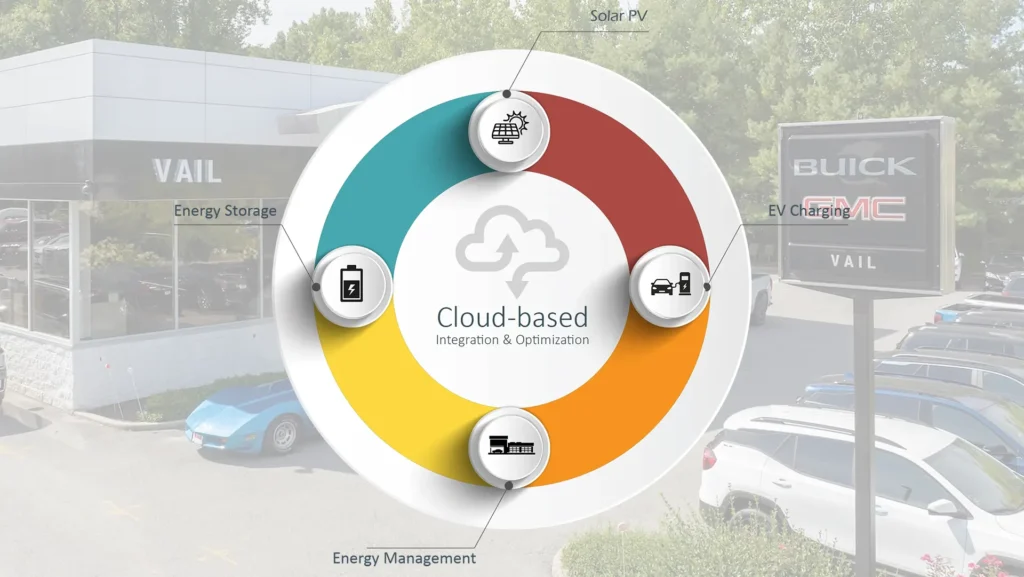
Both sites now run integrated on-site energy systems: solar generation, battery storage, direct EV charger control, and ongoing facility management.
The battery and controls handle the demand charge problem actively. Without them, solar alone would not move the needle.
The system also participates in grid programs that generate bill credits and revenue.
Those grid revenues make up roughly half of the ongoing financial benefit and are a big part of what makes the investment case work. Kempower DCFC units at both sites meet Toyota’s fast-charging requirements.

The Solution
After completing a project at Oakdale, ownership brought the same approach into the new construction at Sunrise Toyota North in Medford, working with Penney Design Group from the design stage.
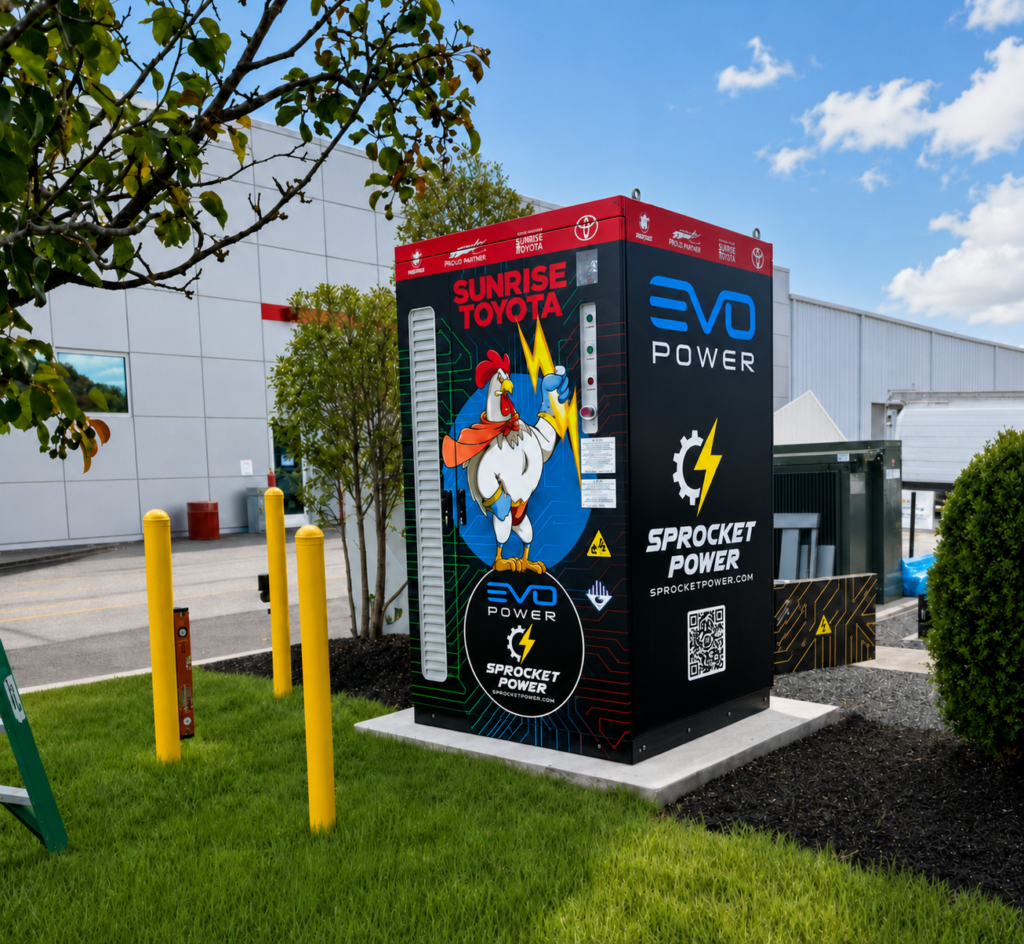
Both sites now run integrated on-site energy systems: solar generation, battery storage, direct EV charger control, and ongoing facility management. The battery and controls handle the demand charge problem actively. Without them, solar alone would not move the needle.
The system also participates in grid programs that generate bill credits and revenue. Those grid revenues make up roughly half of the ongoing financial benefit and are a big part of what makes the investment case work. Kempower DCFC units at both sites meet Toyota’s fast-charging requirements.
The Results
- 90% reduction in net utility costs at both sites, projected five-year payback
- Direct control over demand charges, which make up to 60% of a typical commercial utility bill
- Grid program participation generating bill credits and revenue on an ongoing basis
- DCFC infrastructure in place at both locations
- Sprocket Power manages the system and provides monthly performance reports
“We have experienced rising utility costs for years. This investment in our facility and business creates a strong investment case by controlling these costs.” — Jimmy Berg, Dealer Principal, Sunrise Toyota
What This Means for Your Businesses
This project is not really about EV chargers. It is about a business that had no way to fight rising utility costs and found one. The DCFC infrastructure was a byproduct of solving a bigger problem.
Any commercial facility facing high and unpredictable utility bills can achieve a similar outcome with the right combination of storage, controls, and active management.