
Last month, our team attended the 2026 EV Symposium and Ride & Drive at Farmingdale State College — one of Long Island’s most important annual gatherings for anyone working in EV fleets, charging infrastructure, and clean energy.
The event is co-organized by PSEG Long Island, Drive Electric Long Island, Emerald Alternative Energy Solutions, and Empire Clean Cities, and it consistently draws the right mix of utilities, state agencies, fleet operators, municipalities, and infrastructure providers.
What Was on the Agenda
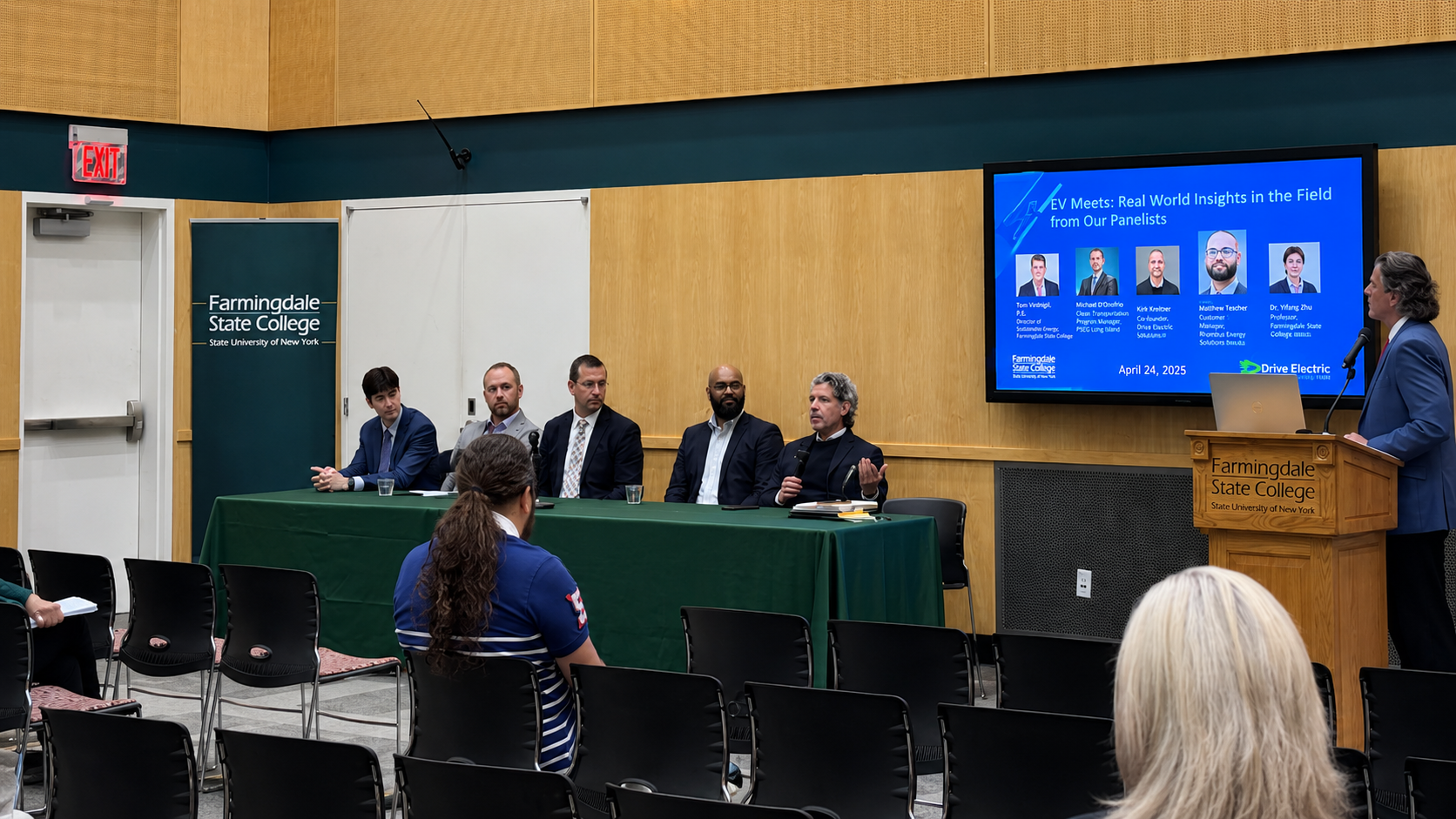
This year added a dedicated fleet focus with a panel titled “EV Fleets: Real World Insights in the Field,” moderated by Ron Gulmi of Emerald.
Panelists included fleet operators from NYC DCAS, NYPA, the Port Authority of NY/NJ, and Long Island Cares — practical, on-the-ground perspectives from organizations that are actually doing this work at scale.
- Paul DiBenedetto from PSEG Long Island covered the current state of EV charging infrastructure on Long Island, including the EV Make Ready program.
- Rosemary Mascali of Drive Electric Long Island presented data on regional EV adoption trends.
- NYSERDA walked through state-level support for charging infrastructure — programs that apply to both public agencies and private businesses and are still underutilized by most commercial fleet operators.
The afternoon included a Ride & Drive with fleet vehicles on display and a vendor exhibit hall.
What We Took Away
The conversation around fleet electrification has shifted.
The question is no longer whether to electrify — it’s how to sequence it, what programs to use, and how to get the depot infrastructure right before the vehicles arrive.
A few things that stood out:
- Incentive timing matters more than most operators realize. PSEG LI’s EV Make Ready program has funding cycles. Getting into the planning process early changes the economics — and how you structure your EV charging strategy before vehicles arrive determines what you pay for years.
- Adding EV charging to a facility without addressing peak demand is a common and expensive mistake. The load spikes that come with fleet charging can drive up your entire monthly bill. Demand charge control is the part of this equation most operators underestimate until they see their first bill.
- State support extends well beyond passenger vehicles. Commercial and municipal fleets have access to programs they aren’t tapping.
- When EV charging is designed as part of an integrated energy system — not bolted on after the fact, the incentive stack gets significantly better.
- The most useful insight in the room came from fleet operators who have already gone through it, not manufacturers, not consultants.
Why We Show Up
Events like this are where Long Island’s EV ecosystem actually connects — utilities, agencies, fleet managers, and infrastructure providers in the same room, working through the same problems.
Sprocket Power works at that intersection. We’re there to strengthen the relationships that help our customers move faster and smarter on electrification.
If you’re thinking about your fleet’s EV transition and want to talk through where to start, reach out to our team.
We’ll start with a free assessment and guide you through the options!