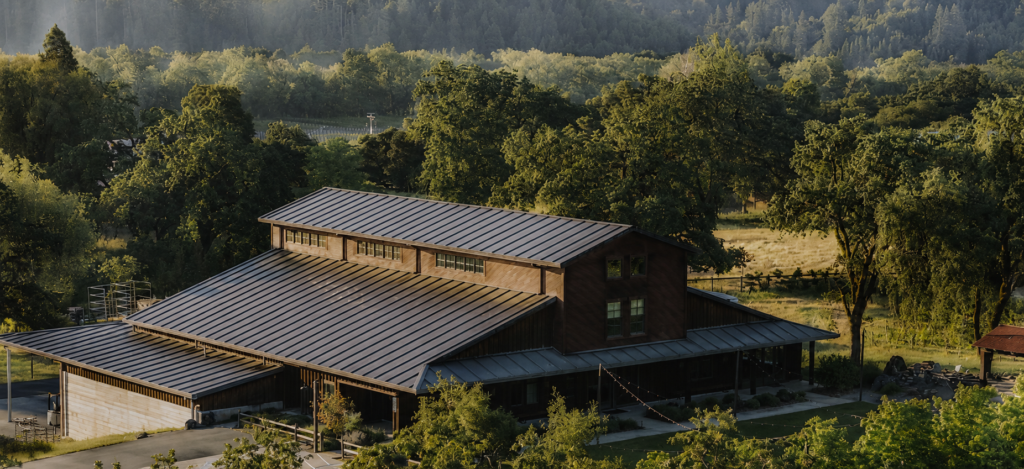
Back in the 1850s, a hops farmer named Reuben Harper worked this same patch of land in the Russian River Valley.
He’s still here, in a way — resting among the vines he once tended, under a giant old California Bay Laurel tree.
Today, the Underwood family, in the wine business since 1888, farms this ground with that same love and care, five generations later.
That kind of staying power doesn’t happen by luck. It happens because you treat the land like something you pass down, not something you use up.
Farming For The Long Run
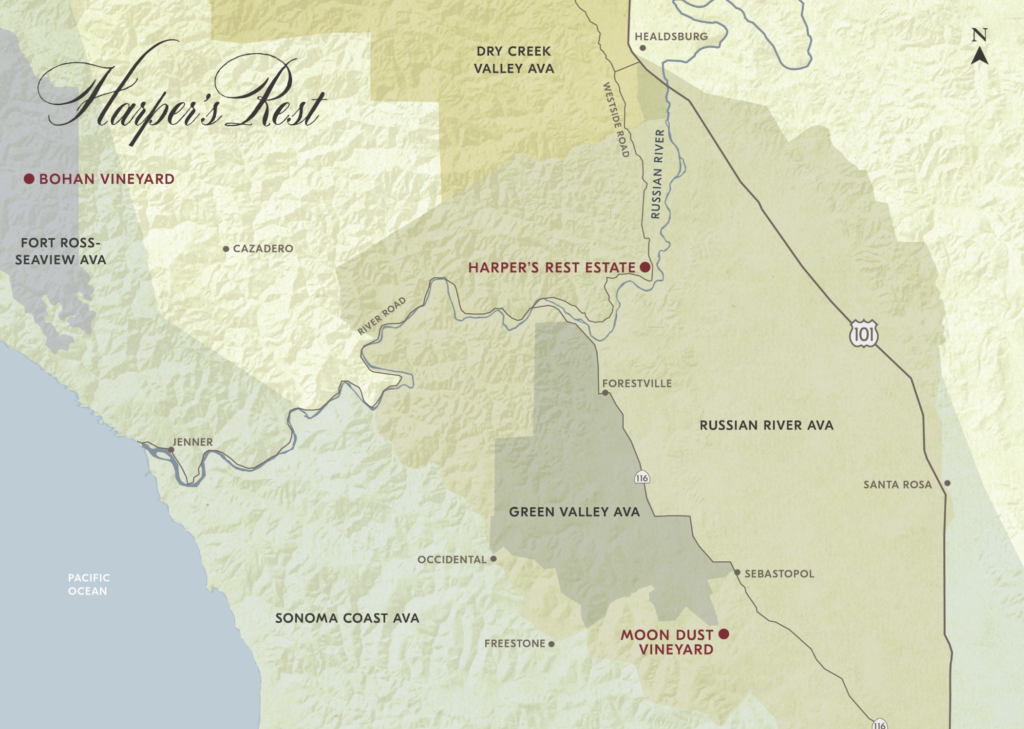
Harper’s Rest is Regenerative Organic Certified across both of its vineyards — Harper’s Rest, on the sunny slopes of the Middle Reach, and Moon Dust, tucked in the cooler, foggy Sebastopol Hills.
That means no synthetic fertilizers, pesticides, or fungicides, ever.
Instead, the team builds up the soil itself: cover crops, compost, grazing animals that return nutrients to the ground, and as little tilling as possible.
The payoff is soil that’s alive — soil that holds water better, fights off disease more naturally, and grows fruit with real depth of character. It’s a slower way to farm. It’s also, in a very real sense, a bet on resilience: healthy soil handles drought and heat far better than tired, worn-out soil does.
Letting The Land Make The Wine
That same patience carries into the winery. Harper’s Rest doesn’t add commercial yeasts, enzymes, or acids — just what the grapes bring on their own. The wines rest for 14 months in French oak, undisturbed, building flavor the slow way.
Winemaker Vance Rose and vineyard manager Matt Stornetta treat every block of vines on its own terms, down to the clone. It’s the kind of attention to detail that only makes sense if you plan to be farming this land for a very long time.
A Bigger Kind Of Resilience
Caring for the soil this way is really a form of resilience — building something that can hold up under stress instead of something that slowly wears down. It’s the same idea Harper’s Rest has carried into how it powers its operations.
Wineries across Napa and Sonoma have had to plan for a tougher reality in recent years: wildfire season and planned power shut-offs that can leave a business in the dark when it can least afford to be.
Adding to this issue is that running generators runs counter to the winery’s deep sustainability goals.
For Harper’s Rest, the answer has been the same instinct that shows up in the vineyard — don’t just absorb the risk. Build something stronger.
That’s the idea behind Sprocket Power’s work with Harper’s Rest: on-site energy that gives the winery more control over its own power, no matter what the grid is doing that day. Same care for the land. Same care for what keeps it running.
You can read more in our Harper’s Rest Microgrid Case Study .
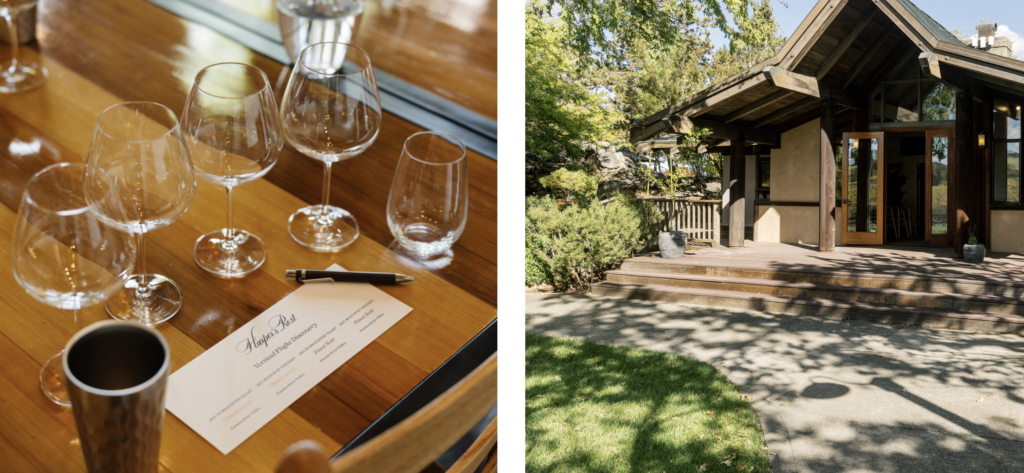
Come Visit Harper’s Rest
Harper’s Rest sits just west of the Russian River, in the heart of the Middle Reach — some of the best Pinot Noir and Chardonnay country anywhere, and a beautiful place to taste it.