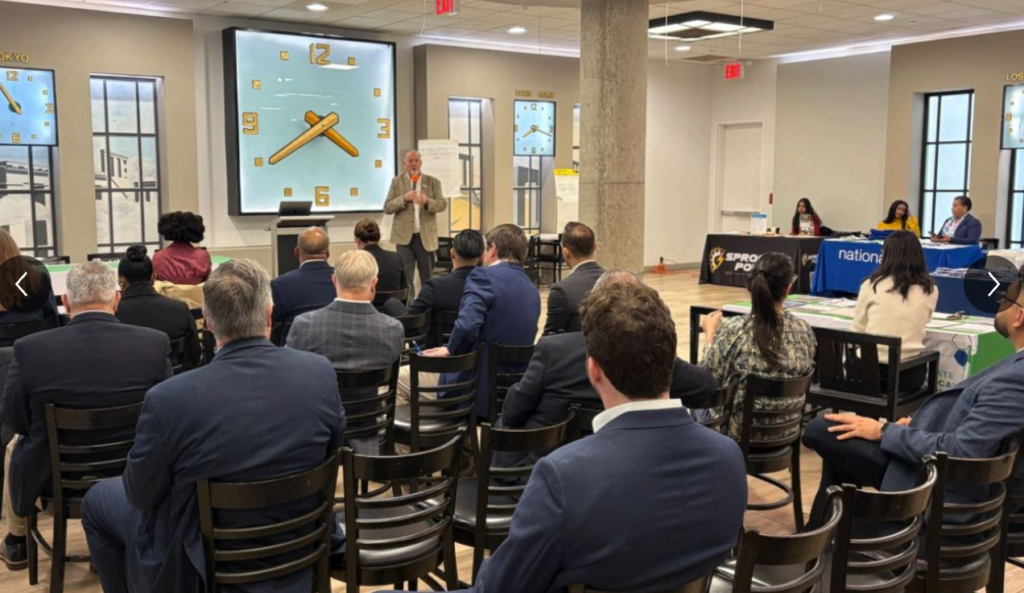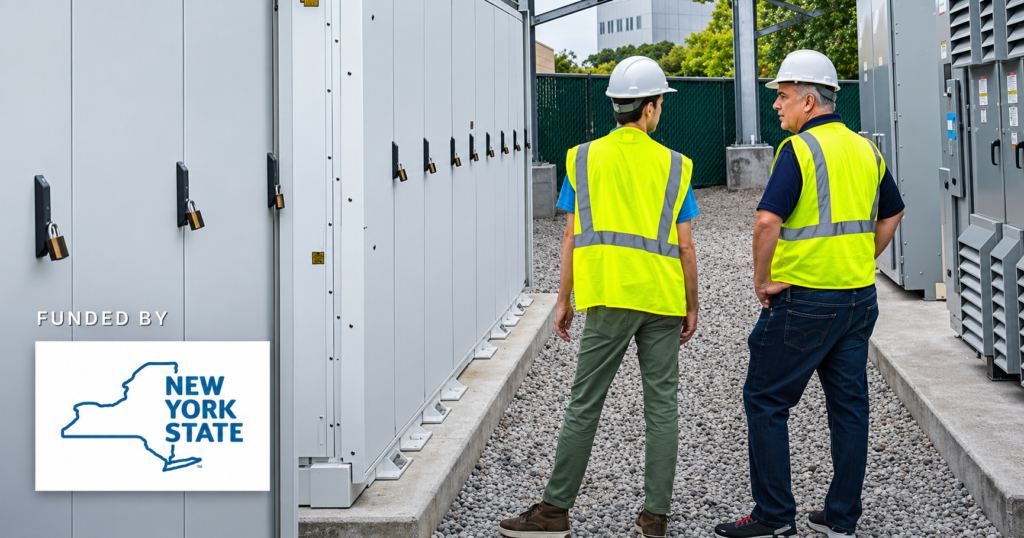

What could go wrong in a real-world energy storage project? In this fireside chat, the partners behind the Sunrise Toyota microgrid share the pitfalls, lessons learned, and why the right technology and implementation partners matter.
Recorded on November 5, 2026, the conversation uses the Sunrise Toyota energy storage deployment as a case study. Read the full Sunrise Toyota case study.
Installing a battery on its own won’t deliver the savings a project was modeled to produce. Those results depend on decisions made at every stage: how the system is sized, integrated, controlled and operated. Three perspectives from the project explain where deployments like this can go wrong, and how an integrated approach keeps them on track.
Key Moments
- 00:00 Introduction, Tobias Fischer
- 00:36 Dennis Quinn: Sprocket Power and the Sunrise Toyota project
- 05:11 Dennis Quinn: Why batteries need active control
- 09:45 Yanu Choi: EVO Power USA and what makes a reliable storage partner
- 16:42 Prasenjit Bhadra: Ranial Systems and edge AI controls
- 23:07 Worst cases: what happens when systems don’t coordinate
- 27:26 Wrap-up
Microgrid Development and System Integration
Dennis Quinn, Co-Founder & President, Sprocket Power:
At Sunrise Toyota in Oakdale, adding a 100 kW DC fast charger to the used-car building would have roughly doubled or tripled a demand of about 45–50 kW. With demand charges of $20–25 per kW per month, a single uncontrolled charging session could add around $2,500 to a monthly bill. Sprocket Power designed an integrated system to handle that load: rooftop solar, battery storage, and direct control of the charger. The system also works alongside the site’s existing standby generator.
What can go wrong: Solar is passive, but a battery is an active asset. It only saves money when it’s controlled against the building’s load in real time. The most common issue Dennis sees is lost communication, whether from an internet outage or a failed router. When the system can’t respond, the demand charge is set for the month and can’t be reversed.
That’s why control logic has to stay on site, so the system keeps operating and recording data even when it’s offline. As Dennis put it, “Once the project is done, that’s when the real work begins.”
Battery Energy Storage Technology
Yanu Choi, CEO, EVO Power USA:
EVO Power USA builds on EVO Power’s track record of more than 125 distributed energy projects in Australia since 2019. At Sunrise Toyota, EVO delivered a turnkey battery system: equipment, installation, commissioning, and long-term service. The system uses liquid-cooled LFP batteries with a safety design tested to UL 9540A.
What can go wrong: A good product isn’t enough. Yanu named three things to look for in a storage partner:
- Reliable delivery on the project schedule
- Hands-on installation and commissioning that integrates the battery with solar, EV charging, and the site’s power supply
- Long-term technical support in the U.S.
Without all three, customers can struggle to run a major capital investment reliably. With the right integration and operating strategy, storage becomes a revenue-generating asset rather than just a cost.
Intelligent Controls and Energy Management
Prasenjit Bhadra, Founder & CEO, Ranial Systems:
Ranial Systems is a New York company backed by the National Science Foundation and NYSERDA. It puts edge AI on site that learns the facility and decides, second by second, when to use, store, or export power. The system controls more than the battery: it also manages EV chargers, generators, and building systems, and it flags maintenance issues before they turn into failures.
What can go wrong: Systems that aren’t coordinated work against each other. In one common pattern:
- Solar overproduces at midday, and the battery doesn’t capture it.
- EV charging drains the battery during the day.
- The evening peak hits with nothing left in reserve, and just 15 minutes of that peak sets the month’s demand charge.
Undetected degradation in batteries, inverters, or solar quietly costs money every day. Without intelligent cycling, batteries also fall short of their rated life.
The Takeaway
A functioning system isn’t the same as a high-performing one. Every component needs expertise behind it, and the partners need to stay with the project long after go-live.
Participants
Dennis Quinn
Co-Founder & President, Sprocket Power
Developer and operator of integrated microgrids for dealerships, fleets, and commercial sites, specializing in demand-charge reduction and grid revenue.
Dennis Quinn on LinkedIn | Sprocket Power on LinkedIn
Yanu Choi
CEO, EVO Power USA
Battery energy storage provider for commercial and industrial sites, specializing in safe, reliable, right-sized storage systems built for long-term performance.
Yanu Choi on LinkedIn | EVO Power USA on LinkedIn
Prasenjit Bhadra
Founder & CEO, Ranial Systems
Intelligent controls and energy management software provider, specializing in real-time dispatch and optimization of storage, solar, and EV charging.
Prasenjit Bhadra on LinkedIn | Ranial Systems on LinkedIn
Host and Moderator
Tobias Fischer
Founder & CEO, HigherUp Digital
B2B marketing partner to energy companies in New York, specializing in battery storage, microgrids, EV charging, solar, and utility programs.
Tobias Fischer on LinkedIn | HigherUp Digital on LinkedIn
Planning an Energy Project for Your Business?
Request a complimentary, no-obligation energy assessment from Sprocket Power. We’ll model your demand-charge savings and grid revenue potential against your actual utility rate. Request your assessment.