Microgrid Knowledge recently featured Hampton Jitney’s new microgrid at its Calverton facility, one of the region’s first mid-market fleet microgrids. The article examines how a 50-year-old Long Island institution is preparing for electrification before its first electric coach arrives.
For mid-size fleet operators, infrastructure must be ready before the vehicles are. That can mean transformer upgrades, interconnection, and new charging load, often with less support than larger fleets get.
The same goes for grid programs. As Maria Fields told Microgrid Knowledge, a business like this is often encouraged to join demand response but left to figure out how on its own.
That’s the gap our managed microgrids are built to close.
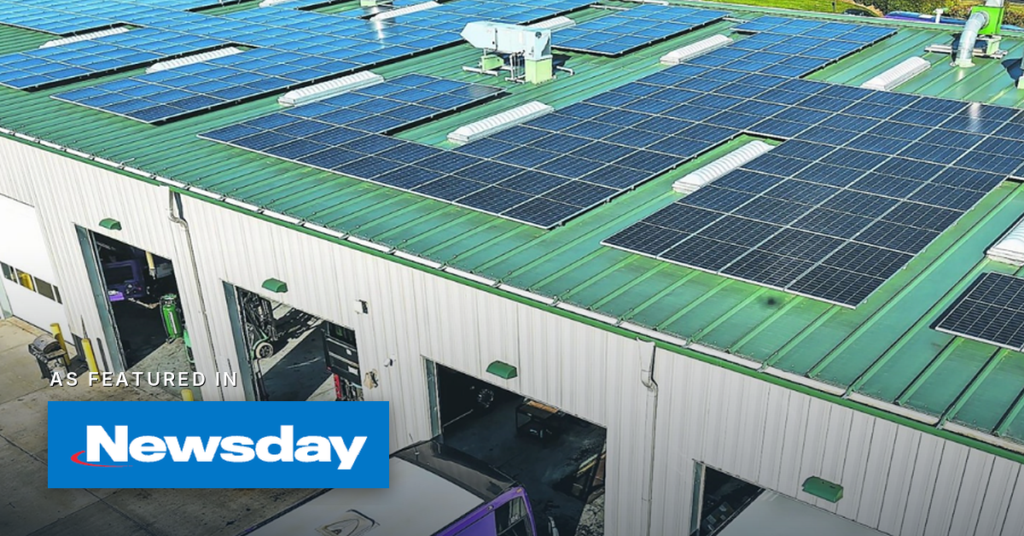
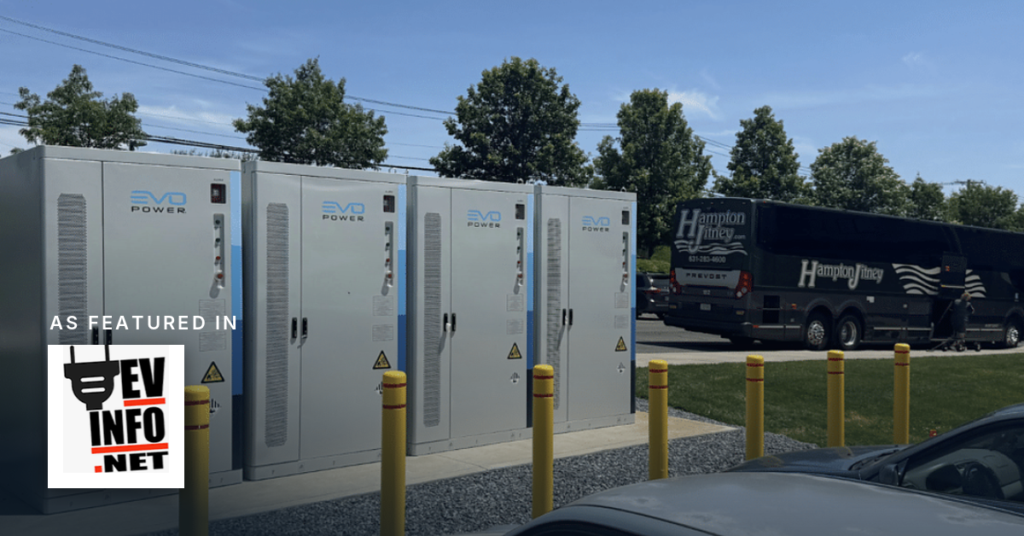
We design, build, and operate the system. Phase 1 at Calverton combines 250 kW of rooftop solar, a 500 kW / 1 MWh battery, and our automated optimization software. The software decides in real time when to draw from the grid, when to dispatch stored energy, and when participating in grid services makes economic sense. That reduces peak-demand costs and earns grid value without affecting a facility where customers come and go all day.
The feature highlights:
- A phased build designed to scale. Phase 1 included upsizing the transformer and adding ten chargers for passenger EVs. Phase 2 adds a 1 MW charging hub with fast charging for the coming electric motor coach. It also connects the terminal building to the microgrid; Hampton Jitney estimates that with full batteries and HVAC off, the battery could keep its nearly 50,000 sq ft facility running for close to two days, with no diesel generator on site.
- A charging hub for the community. Hampton Jitney’s coaches will mostly charge overnight, which leaves capacity during the day. The company is talking with the town about letting school buses from the neighboring bus yard charge there, and local delivery fleets and farms have shown interest too.
- Modeled and operated for results. Hampton Jitney relied on our team to model the project’s financial future, and we operate the system day to day: managing seasonal changes and real-time battery dispatch so the projected value holds up. Learn more in our Hampton Jitney case study
Read the full feature on Microgrid Knowledge →
Planning a fleet transition? Get in touch with our team and we’ll model a phased path that fits your vehicles, schedules, and tariff.