Electrifying a fleet isn’t just a hardware decision.
It’s a utility decision — and the businesses that plan for that upfront tend to end up in a much better spot than the ones who don’t.
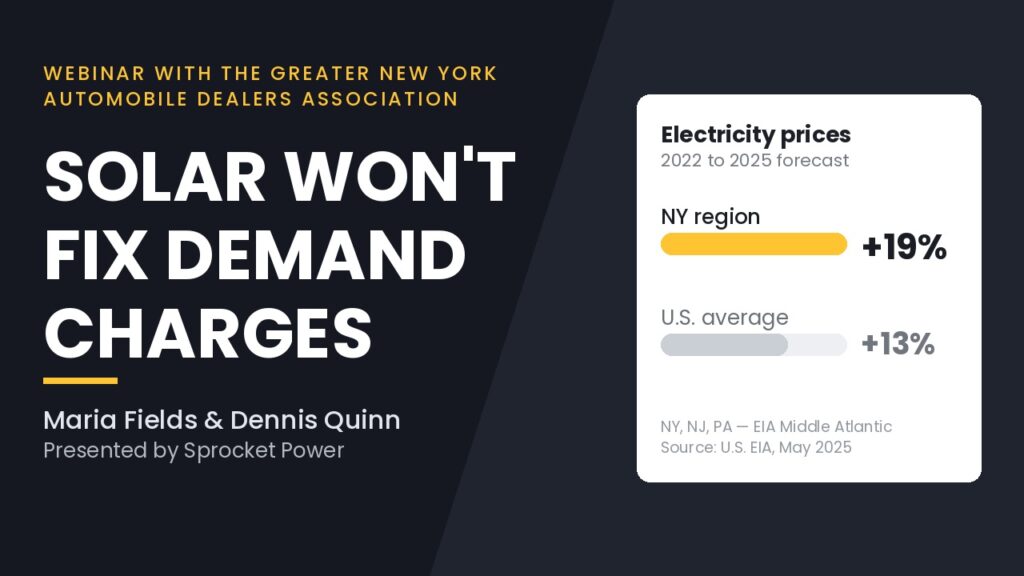
That’s the core of a recent webinar Maria Fields co-hosted with Thomas McNeils of Kempower, our longtime charging equipment partner.
This is a conversation with deep insights, not a sales pitch!
A few of the highlights:
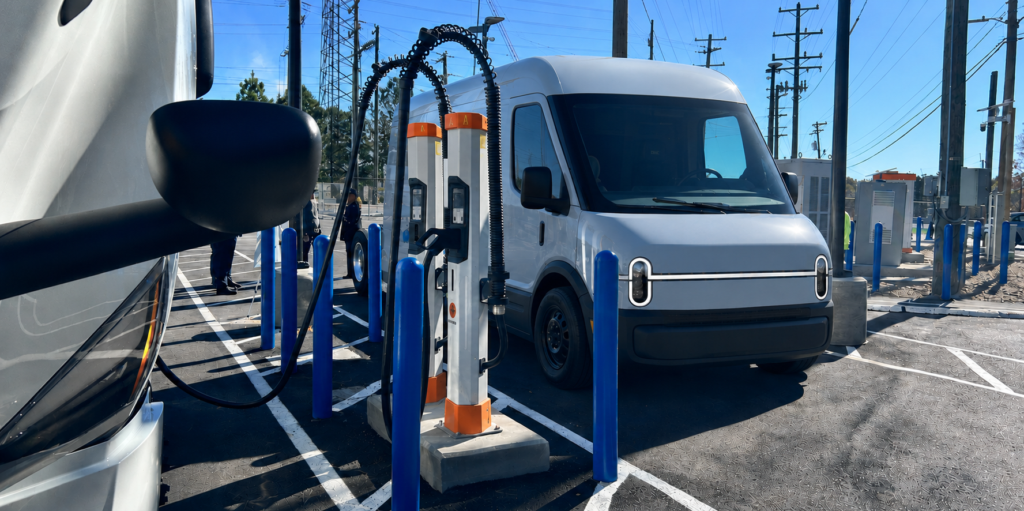
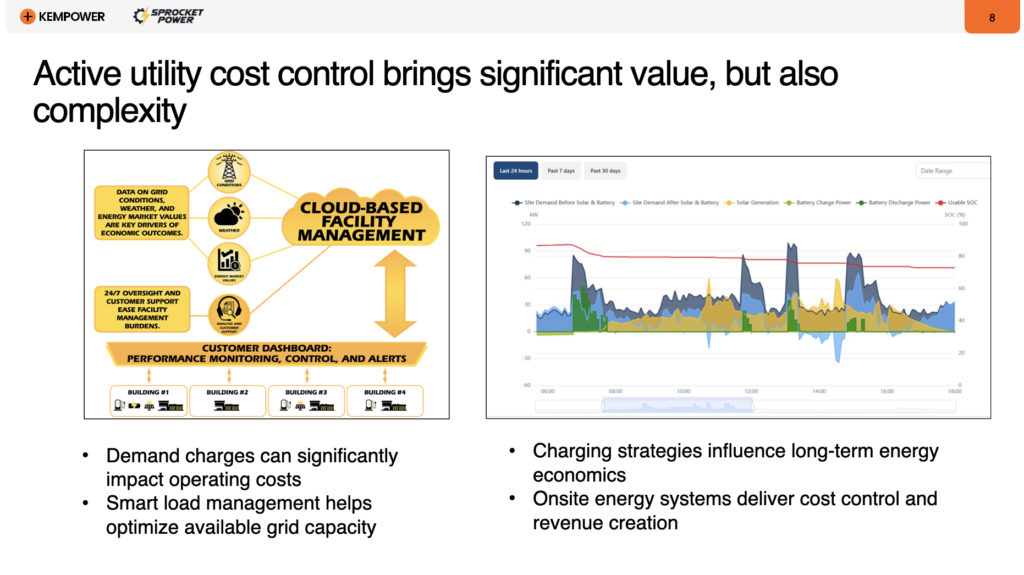
- Unmanaged charging is tough on everybody. DC fast charging pulls a lot of power from the grid in a short window. Without active management, that shows up as demand spikes — costly for the site, and not great for the utility either.
- The real savings come from the full system, not just one piece. At one site combining solar, battery storage, EV charging, and active management, Sprocket Power is seeing a utility cost benefit of 70–80%. The battery absorbs the sharp charging spikes; solar feeds it at low cost; the system learns and predicts demand over time. Learn more here!
- Plan for five years out, not just next year. One theme from the discussion: sites that build in room to scale, instead of a quick fix that has to get ripped out later — end up ahead. That means working closely with your utility early, not after the fact.
- Service matters as much as design. Kempower’s tiered support model, backed by their ChargeEye platform, and Sprocket Power’s on-the-ground operating agreements are built to work together — so issues get caught and resolved before they become downtime.
- Real sites, real numbers. From a fleet hub phasing in 600 kW of DC fast charging to EV Realty’s San Bernardino facility — the largest KemPower site anywhere, with roughly 10 megawatts of capacity and more than 70 chargers, the discussion walks through what good planning actually looks like on the ground. Watch the full webinar →
If you’re weighing an electrification investment, this is worth 30 minutes of your time.