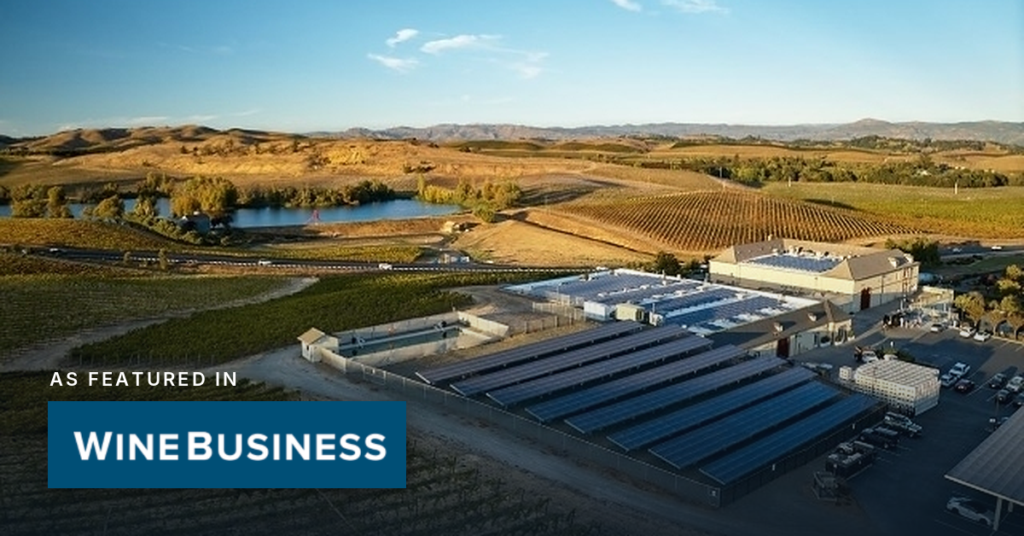
WineBusiness.com recently covered wine country’s growing push for energy resilience. The story included Sprocket Power’s expansion into the wine industry and the business case we presented at Napa Green’s “Energy Solutions and Independence for Wineries” summit at Grgich Hills Estate.
Public Safety Power Shutoffs are now a regular part of fire season in Napa and Sonoma. An outage at the wrong moment, whether during crush, bottling, or a full tasting room, puts both production and hospitality revenue at risk.
But the conversation at the summit wasn’t only about backup power. It was about economics.
Resilience and utility cost control come from the same system
Solar, battery storage, and active energy management do three things at once. They reduce demand charges, earn revenue and bill credits through utility grid-services programs, and keep critical loads running during grid events.
Utilities facing capacity constraints increasingly pay sites that can shift load or export power. We design that value into the project from day one rather than treating it as an add-on.
In the example Maria Fields shared, a modeled project combined bill savings, incentives, and grid revenue to reach roughly a 72% reduction in utility costs and about a four-year project payback. Every site is different, so we model each system against the winery’s actual tariff and operating profile.
The feature highlights two wineries from the panel:
- Harper’s Rest Winery (Healdsburg) is now under construction on its microgrid. Winemaker and GM Vance Rose described eight recent PSPS events, including one that hit just before a scheduled bottling run. Once the microgrid is online, it will power all five buildings on the property, and the winery expects about a 4.5-year payback. Learn more about their background story here and see our case study for Harper’s Rest here.
- Domaine Carneros shared results from its microgrid, which has been running since 2023. The winery reports around $450,000 in savings, and its payback is now tracking at about seven years instead of the original ten-year estimate. Its controls continuously manage time-of-use rates and demand charges. That kind of active optimization is what determines whether projected savings actually show up.
As Maria told WineBusiness.com, “There’s a strong business case for this.”
Read the full feature on WineBusiness.com →
Curious what the numbers could look like for your winery?
Get in touch with our team and we’ll model a system against your tariff and operating profile.