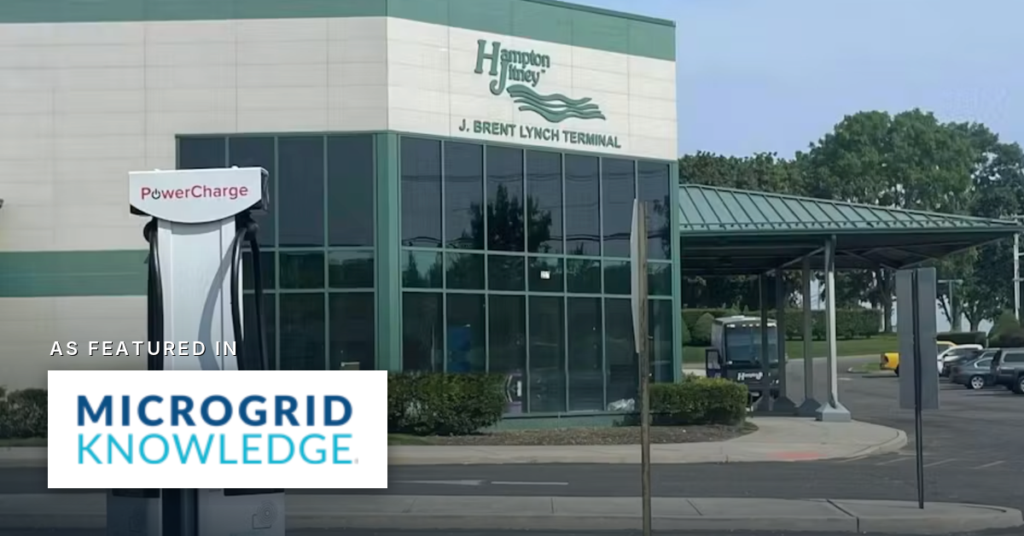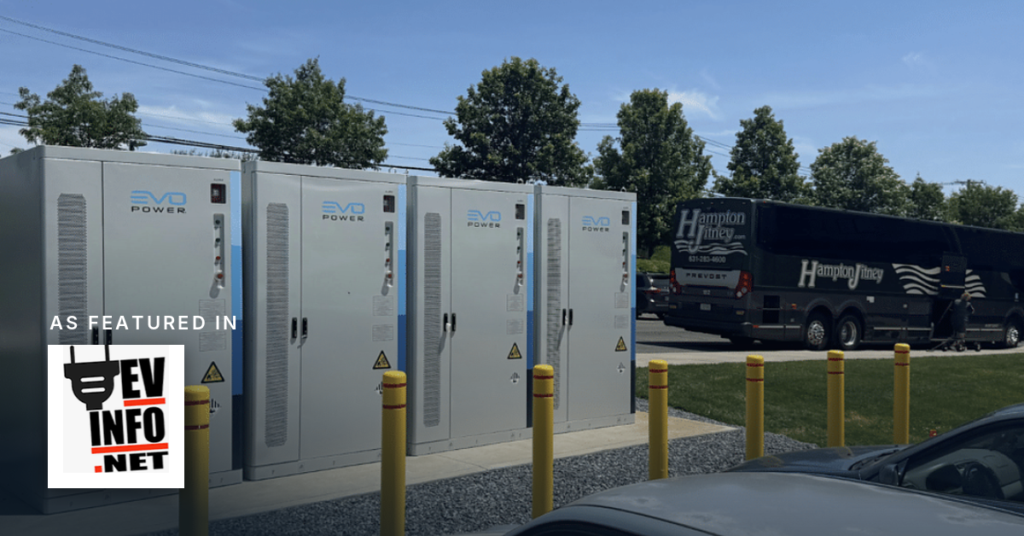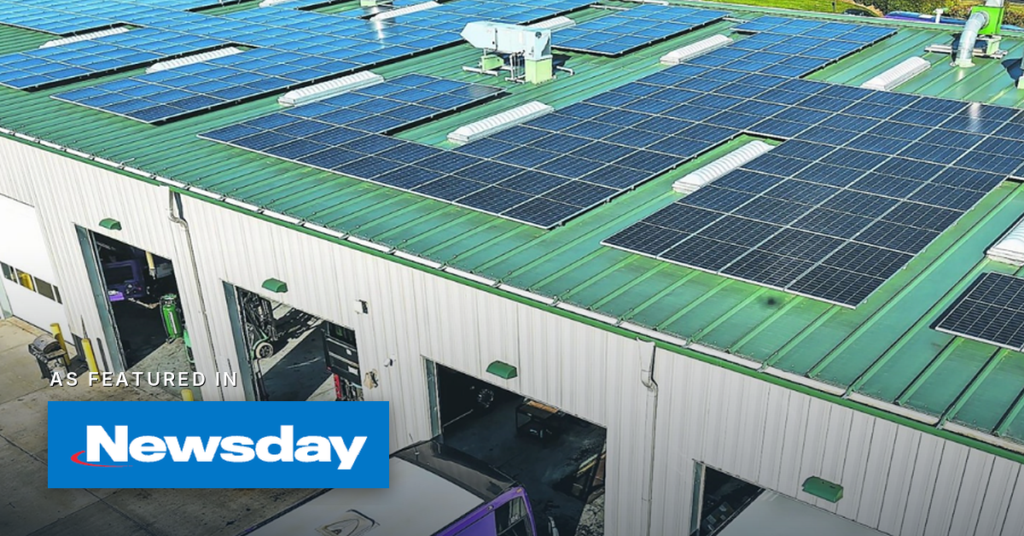
Newsday recently covered the solar-and-storage microgrid we’re building with Hampton Jitney.
The facility is designed to power a future electric coach fleet and to serve as a regional charging center for other commercial vehicles on the East End.
Large-scale fleet charging usually comes with a utility problem. Adding a megawatt of fast charging to a site that peaks around 200 kW would normally require the utility to upgrade the local grid, which is costly for everyone and slow for the fleet.
That’s the gap our managed microgrids are built to close.
Instead of drawing everything from the grid at peak times, the Calverton microgrid produces and stores its own power. It buys grid energy when prices are lower, charges the battery from on-site solar, and makes stored energy available to the grid when LIPA needs extra capacity. That availability earns credits through PSEG Long Island. The system can also power the facility if grid power goes down.
We monitor and manage it after go-live so those savings and credits hold up in daily operation.
The feature highlights:
- Built in phases. Phase 1, nearing completion, includes 250 kW of rooftop solar and a battery that is already tied to the building, alongside ten Level 2 chargers and a portable DC fast charger. Phase 2 adds another 200 kW of solar and plans for 1 MW of DC fast charging.
- Designed around the economics. The work was scheduled to qualify for available federal tax credits before the deadlines, which can offset roughly a third of the project cost. Credits from PSEG Long Island add further value. See our case study for Hampton Jitney here
- A shared hub for the region. School buses, Suffolk Transportation, and regional shuttle operators already use the Calverton yard. Once the hub is built out, other fleets can charge there instead of building their own infrastructure.
As Sprocket Power CEO Maria Fields told Newsday, “There are much smarter ways now to manage that demand where it occurs.”
Read the full feature on Newsday →
Planning a fleet transition?
Get in touch with our team and we’ll model how charging, storage, and solar can fit your site without costly utility upgrades.